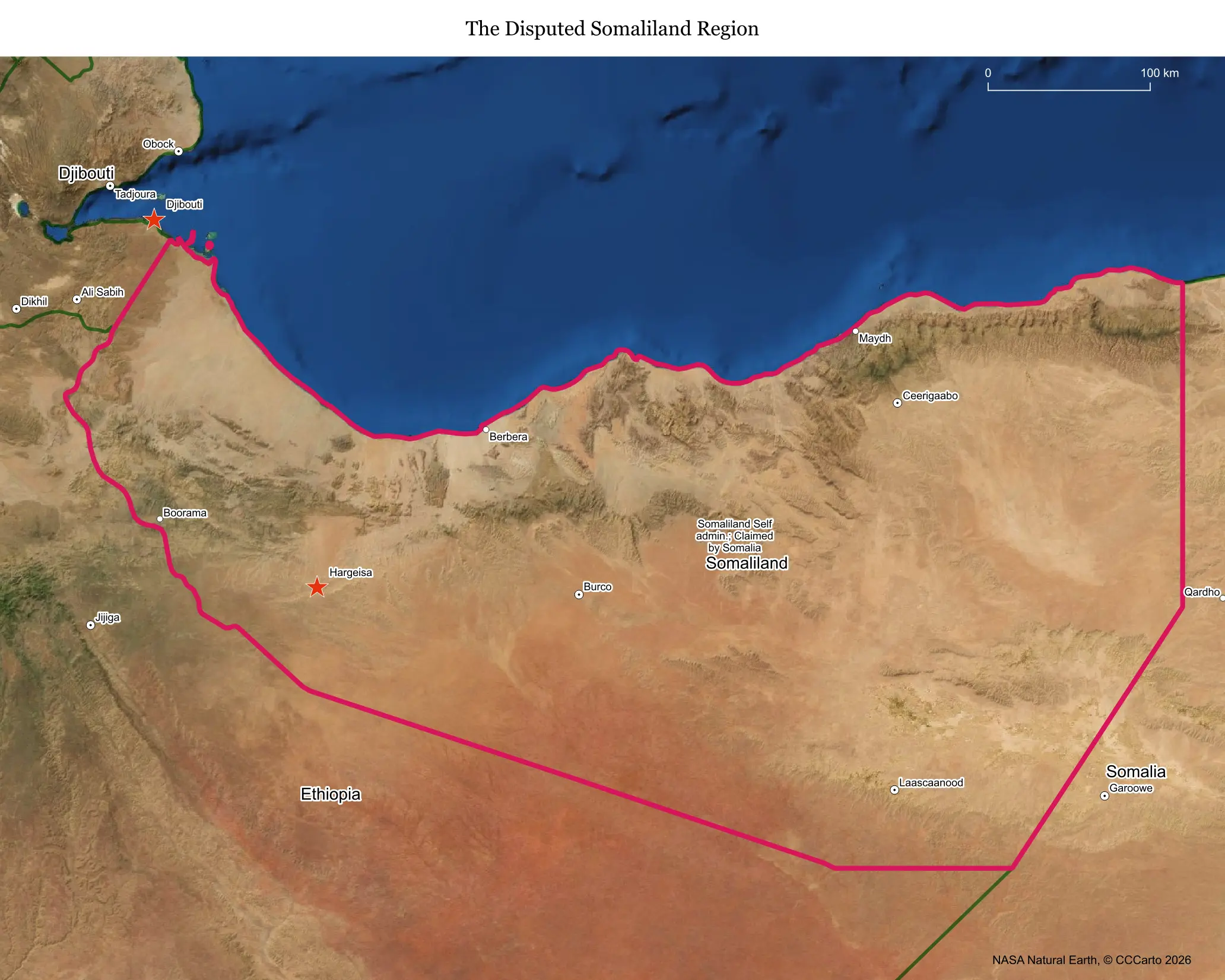
What makes this territory disputed
Somaliland declared independence from Somalia in May 1991 as the country collapsed into civil war, reviving the brief 1960 independence it held for five days before voluntarily uniting with Italian Somaliland to form the Somali Republic. Somalia's federal government has never accepted the breakaway and continues to claim Somaliland as one of its own federal member states, even though Hargeisa has run its own government, currency, and security forces for over three decades.
Who is involved, and for how long
The core dispute is between Somaliland and the internationally recognized government of Somalia, and it has persisted for 35 years without international resolution. The dynamic shifted dramatically on 26 December 2025, when Israel became the first country in the world to formally recognize Somaliland's independence, describing the move as being in the spirit of the Abraham Accords, prompting immediate protests across Somalia and an emergency African Union Peace and Security Council session.
Resources and strategic value
Somaliland's most valuable strategic asset is the port of Berbera on the Gulf of Aden, which has drawn major investment from the United Arab Emirates to expand it into a significant regional shipping and logistics hub with an eye toward serving landlocked Ethiopia. The territory also exports large numbers of livestock to Gulf states and has attracted some oil exploration interest, though its economy remains modest overall.
Who lives there and what's on the land today
Population estimates for Somaliland range widely, roughly 4 to 6 million people, with Hargeisa as its functioning capital, home to a relatively stable, internationally praised democratic system by regional standards, including competitive multiparty elections. The territory also has an unresolved internal boundary dispute with the newly formed North East State of Somalia over the Sool, Sanaag, and Cayn regions, which saw serious fighting around Las Anod in 2023.
Is the boundary stable?
Somaliland's external claimed boundary with Somalia proper is not contested militarily since it largely follows the old colonial-era border between British and Italian Somaliland. Its internal eastern boundary is far less settled, however, with armed clashes over Las Anod in 2023 between Somaliland forces and the newly declared North East State, an unresolved local conflict that Somaliland's own leadership warns could reignite.
Is a resolution coming?
The path toward broader recognition is genuinely uncertain but newly active. Israel's December 2025 recognition was followed by ambassador appointments on both sides in early 2026, and the US Congress is considering the Republic of Somaliland Independence Act, which would authorize the president to extend American recognition, though Somalia, the African Union, and most of the world continue to reject any change to Somaliland's status.
Does this dispute affect the world?
Yes, increasingly. Israel's recognition is widely seen as testing the African Union's founding principle of respecting colonial-era borders, a precedent other African governments worry could encourage further secessionist movements across the continent. Somaliland's Berbera port and Gulf of Aden location also carry real significance for Red Sea shipping security and for Gulf states and Ethiopia seeking alternative maritime access, adding practical geopolitical weight to what was, for decades, treated as a mostly symbolic dispute.
Sources
- Al Jazeera: Somaliland Marks First Independence Day Following Israeli Recognition
- Amani Africa: Emergency Session on Israel's Recognition of Somaliland
- Wikipedia: International Recognition of Somaliland
- US Congress: H.R.3992 — Republic of Somaliland Independence Act
- The National Interest: Israel Just Recognized Somaliland Independence. The US Should Follow.