Oil Field Maps
Kuwait Oil Fields Map
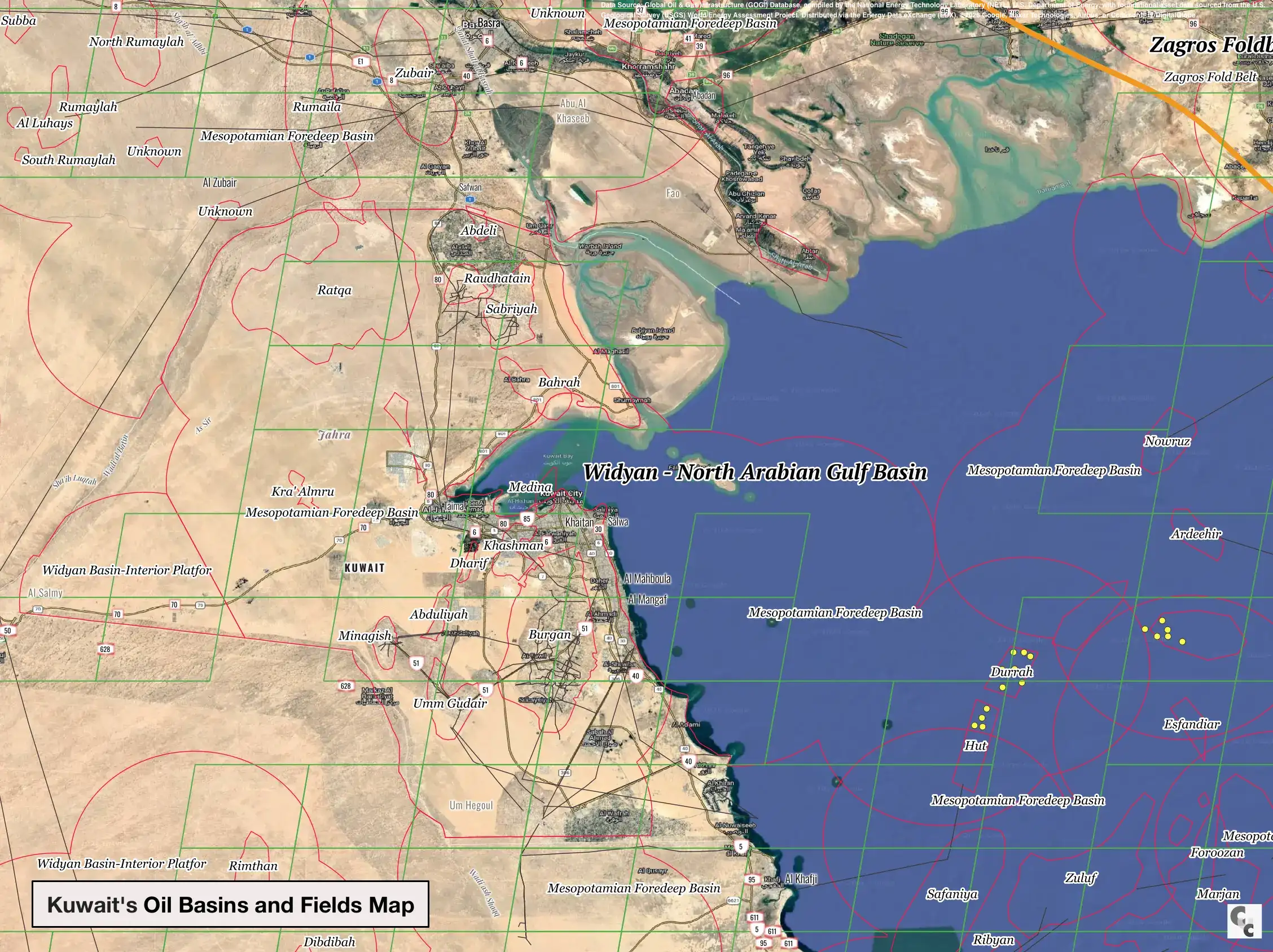 Kuwait Oil Basins and Fields Map
Kuwait’s oil history is a crucial chapter in the story of global energy. Oil was first discovered in Kuwait in 1938, with the first significant oil field being the Burgan Field. The discovery marked the beginning of a transformation for the small Gulf state, which rapidly grew into one of the world's leading oil producers. The oil boom in Kuwait dramatically changed its economic landscape, providing substantial wealth and enabling rapid development and modernization.
Over the decades, Kuwait's oil industry expanded significantly, and by the 1970s, it had become a major player in the global oil market. The country’s oil production peaked in the early 1970s and played a central role in global oil prices. Kuwait’s oil fields are renowned for their size and output, particularly the Burgan Field, which is one of the largest in the world. Other significant fields include the Magwa, Ahmadi, and Ratqa fields.
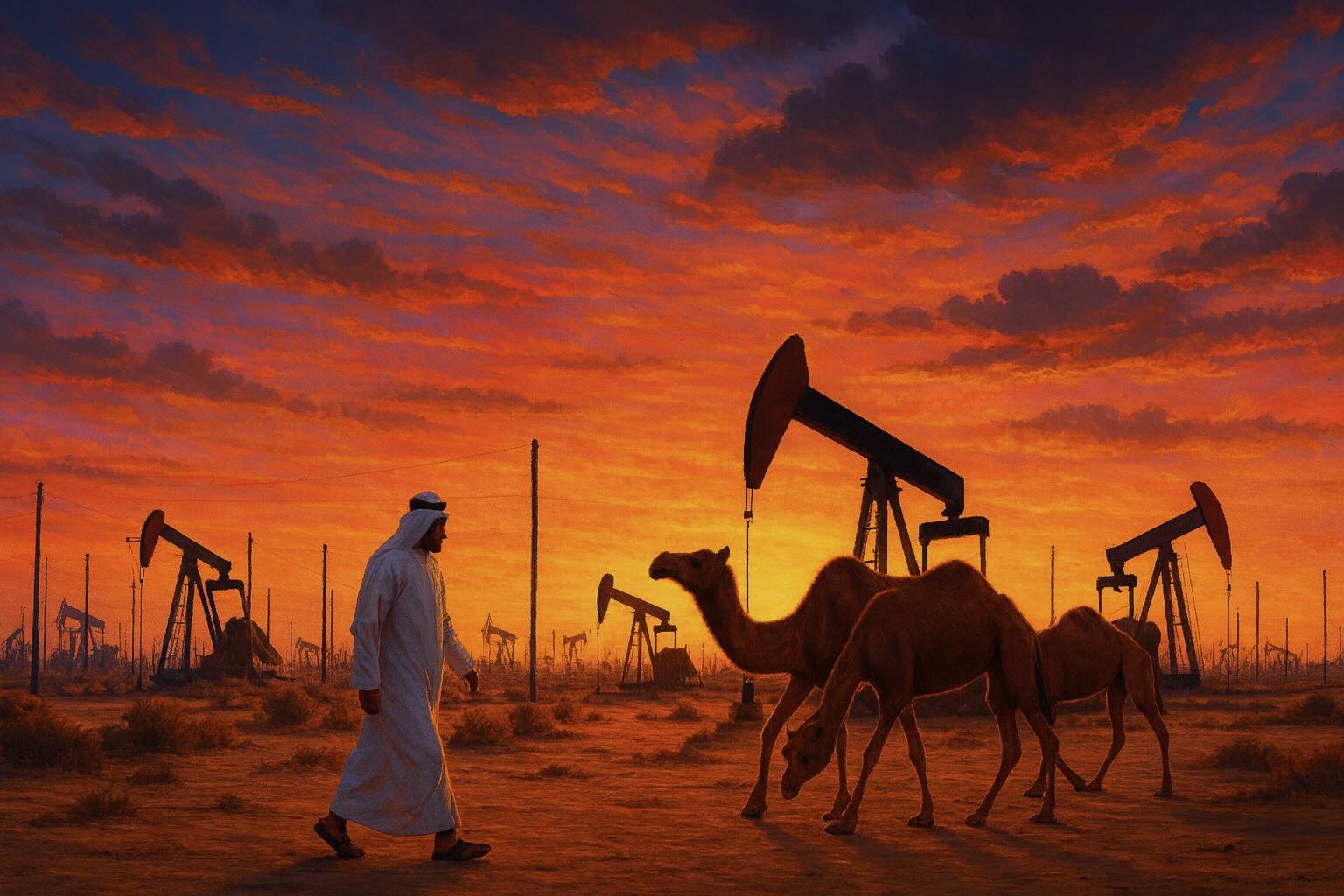
Forty years ago, Kuwait had a large number of active oil fields and derricks, with extensive infrastructure in place to support exploration, extraction, and processing. At that time, there were approximately 300 active oil derricks, reflecting the scale of the industry and the intensity of extraction efforts. The Burgan Field alone had hundreds of active wells.
In recent years, the number of active oil fields and derricks has decreased, primarily due to the depletion of some fields, technological advancements, and shifts in production strategies. As of now, Kuwait operates fewer than 200 active derricks, focusing on optimizing output from existing fields rather than aggressively developing new ones. The reduction is also partly due to the country's adherence to production quotas set by OPEC and efforts to prolong the life of its oil fields.
The question of how soon the oil will run out is complex. Estimates suggest that Kuwait’s oil reserves could last several decades if current production rates are maintained. The Burgan Field, for example, still holds significant reserves, but production rates have declined from their peaks. Kuwait’s reserves are considered to be among the largest globally, and efforts to enhance recovery techniques, including enhanced oil recovery (EOR), are being implemented to extend the lifespan of its fields.
The largest oil fields in Kuwait are the Burgan Field, the Magwa Field, and the Ahmadi Field. The Burgan Field, the largest, has an estimated original oil in place (OOIP) of over 66 billion barrels and has produced more than 50 billion barrels of oil to date. The Magwa and Ahmadi fields are also substantial, with significant reserves and production capacities, although smaller compared to Burgan.
Overall, Kuwait’s oil fields continue to play a critical role in its economy, but the focus is shifting towards managing and maximizing the potential of existing reserves rather than expanding new fields. The future of Kuwait’s oil industry will depend on ongoing advancements in technology, changes in global oil demand, and shifts in energy policy.
Kuwaiti Oil Infrastructure & Sales Impact Analysis
Status Update: June 2026
Current Situation: The February 28 asymmetric strikes and subsequent 3+ month closure of the Strait of Hormuz have fundamentally severed Kuwait’s primary export route. While today's drone and missile strikes primarily targeted civilian aviation (Kuwait International Airport) and regional military installations, they highlight the ongoing, acute vulnerability of Kuwait's domestic logistical and energy network under the strained April ceasefire framework.
1. Impact on Oil Infrastructure & Production
- Upstream Production: Kuwait's oil fields (such as the massive Greater Burgan field) remain largely intact physically, but operational capacity is constrained by a lack of storage. Because Kuwait cannot easily move crude out of the Gulf, domestic storage facilities at Mina Al-Ahmadi are near maximum capacity, forcing tactical production shut-ins to avoid catastrophic overpressure in the logistics chain.
- Downstream Refineries: The Mina Al-Ahmadi and Mina Abdullah refining complexes, alongside the newer Al-Zour refinery, have shifted focus entirely toward domestic fuel security. However, high-value export products (ultra-low sulfur diesel, jet fuel) are bottlenecked due to the maritime blockade.
- Enhanced Security Posture: Following the recent drone bypasses that hit the airport, KOC (Kuwait Oil Company) and KNPC have placed all northern and southern oil installations under maximum air defense protocols, diverting significant state resources to protect gathering centers and desalter units from fragment damage.
2. Current Oil Sales & Export Status
Kuwait's export economy has taken a severe hit because its entire maritime export model relies on tankers traversing the Persian Gulf and exiting via the Strait of Hormuz.
- The Maritime Dead End: Unlike Saudi Arabia (which can divert crude westward via the East-West Pipeline to the Red Sea) or the UAE (utilizing the Habshan–Fujairah pipeline to bypass the strait), Kuwait has no bypass pipelines to non-Gulf ports.
- Sales Volumes: Seaborne crude exports from Kuwait's sea islands and tankers have plummeted by an estimated 80-90% since March. Minor quantities are being held in floating storage or diverted via complex overland trucking routes to friendly neighbors, but this accounts for a fraction of Kuwait's typical ~2.4 million barrels per day export capacity.
- Revenue Crunch: While global oil prices spiked over 2% following today's fresh attacks, Kuwait cannot capitalize on these high prices because it cannot physically deliver the volumes to its core Asian refining clients (Japan, South Korea, China, India).
3. Outlook: What Happens If the Strait Remains Closed for 2-3 More Months?
If diplomacy completely fails and the blockade extends through August/September 2026, the economic and structural consequences will shift from acute disruptions to systemic failures:
| Area of Impact |
2-3 Month Extended Closure Outlook |
| Field Degradation & Shut-ins |
Prolonged shut-ins of mature wells, particularly in Burgan, risk localized reservoir pressure changes and water encroachment. Re-starting these wells later will require expensive well-intervention and workover operations. |
| Fiscal Deficit & Sovereign Wealth |
Kuwait will face a massive fiscal deficit for Q2 and Q3 2026. The government will be forced to draw heavily from the General Reserve Fund (GRF) and potentially liquidate liquid assets in the Future Generations Fund to sustain public sector salaries and subsidize local infrastructure repair. |
| Global Market Realignment |
Asian refiners will permanently adjust their supply chains away from Persian Gulf sour grades, locking in long-term supply contracts with West African, US Gulf Coast, and Latin American producers, permanently damaging Kuwait's market share. |
| Refinery Stagnation |
With nowhere to export refined products, mega-refineries like Al-Zour will be forced to operate at minimal technical turndown levels or undergo emergency economic shutdowns, risking equipment stagnation and catalyst damage. |
Sources & Contextual Framework:
Data and situational analysis synthesized from regional military reports (U.S. Fifth Fleet updates), Kuwait Civil Aviation authority statements regarding the June 3 airport closures, and global energy market impact assessments regarding total Hormuz chokepoint isolation.
Field Acronyms
EUR_MMBOE = Estimated ultimate recovery in million barrels of oil equivalent
Giant oil and gas fields = those with 500 million barrels (79,000,000 m3) of ultimately recoverable oil or gas equivalent.
Super giant oil field = holds equivalent of 5.5bn barrels of oil reserves.
Oil Field Key
- EUR_MMBOE: Estimated Ultimate Recovery in million barrels of oil equivalent (MMBOE).
- RSVS_MMBOE: Reserves in million barrels of oil equivalent (MMBOE).
- EURO_MMBO: Estimated Ultimate Recovery of oil in million barrels of oil (MMBO).
- EURG_TCFG: Estimated Ultimate Recovery of gas in trillion cubic feet of gas (TCFG).
- EURC_MMBO: Estimated Ultimate Recovery of condensate in million barrels of oil (MMBO).
- HL10_MMBOE: Hydrocarbon recovery estimate at a 10% decline rate in million barrels of oil equivalent (MMBOE).
- HL20_MMBOE: Hydrocarbon recovery estimate at a 20% decline rate in million barrels of oil equivalent (MMBOE).
- HL50_MMBOE: Hydrocarbon recovery estimate at a 50% decline rate in million barrels of oil equivalent (MMBOE).
- PRV_USGS_C: Proven reserves or production estimate from the U.S. Geological Survey (USGS).
- PRV_USGS_N: Name of the basin or area of interest identified by the USGS (e.g., San Juan Basin).
- BSN_TELL_C: Basin classification code (e.g., BS000000715).
- BSN_TELL_N: Basin name (e.g., San Juan Basin).
- BSN_BALLY: Basin type classification (e.g., Type 2).
- RSVR_NAME: Reservoir name (e.g., Barnett).
- RSVR_LITH1: Reservoir lithology or rock type (e.g., Shale).
- RSVR_LITH2: Secondary reservoir lithology (e.g., fractured shale).
- ERA: Geological era (e.g., Mesozoic).
- SYSTEM: Geological system (e.g., Cretaceous).
- SERIES: Geological series (e.g., Upper Cretaceous).
- STAGE: Geological stage (e.g., Primary Oil migration).
- AGE_CODE: Geological age code (e.g., MZ_CT_U: Mesozoic, Cretaceous, Upper).
- RSVR_DEPFT: Reservoir depth in feet (e.g., 6065 feet).
- RSVR_DEPKM: Reservoir depth in kilometers (e.g., 1.85 km).
- TRAP_CLASS: Trap classification (e.g., Stratigraphic).
- TRAP_TYPE: Trap type (e.g., Pinch-out).
- TRAP_DESC: Trap description (e.g., Porosity wedge, stratigraphic).
Kuwait Oil Fields
Abdalli Field, Kuwait, Discovered 1990, Giant Field
Bahrah Field, Kuwait, Discovered 1956, Giant Field
Dorra Field, Kuwait, Discovered 1967, Giant Field
Greater Burgan Field, Kuwait, Discovered 1938, Megagiant Field
Hout Field, Kuwait, Discovered 1963, Giant Field
Khafji Field, Kuwait, Discovered 1959, Supergiant Field
Khashman Field, Kuwait, Discovered 1963, Giant Field
Minagish Field, Kuwait, Discovered 1959, Giant Field
Ratga Field, Kuwait, Discovered 1977, Giant Field
Raudhatain Field, Kuwait, Discovered 1955, Supergiant Field
Sabiriyah Field, Kuwait, Discovered 1957, Supergiant Field
Umm Gudair Field, Kuwait, Discovered 1962, Giant Field
Umm Gudair South Field, Kuwait, Discovered 1966, Giant Field
Wafra Field, Kuwait, Discovered 1953, Giant Field
Data Source: EIA/MARTIN
Return to Map Index
Copyright CCCarto 2026