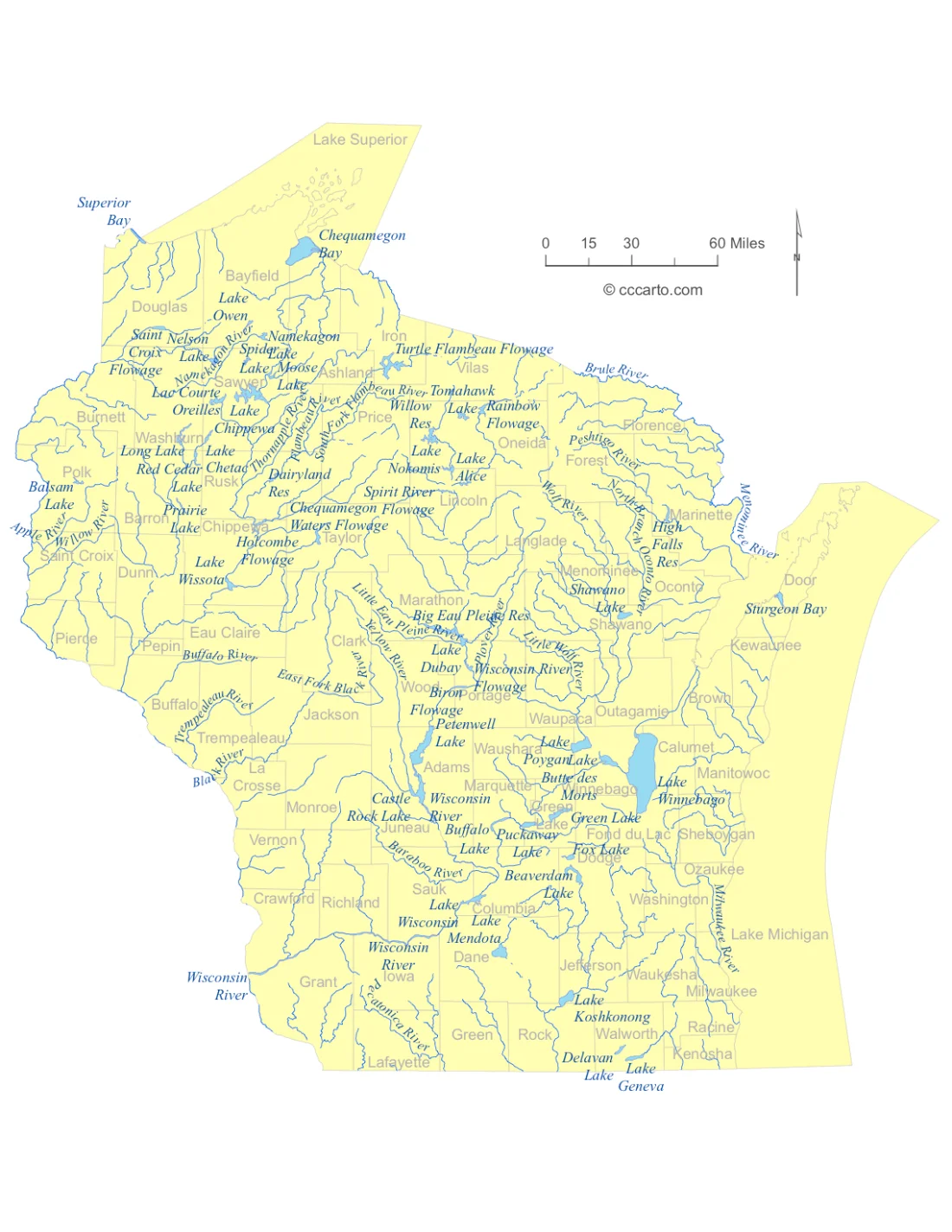
An Overview of Wisconsin's Rivers & Lakes
Largest and Most Famous Rivers, Lakes, Reservoirs, and Streams
Wisconsin is home to several prominent water bodies. The largest lakes include Lake Michigan and Lake Superior, which are among the Great Lakes and form the eastern and northern borders of the state. Major rivers include the Mississippi River, which forms the western border, and the Wisconsin River, which runs centrally through the state. Other notable features are Lake Winnebago and the St. Croix River. These water bodies are essential for recreation, wildlife, and the state’s ecology.
Sources of Water for Rivers and Lakes
The rivers, lakes, and streams in Wisconsin primarily receive their water from local sources such as precipitation and snowmelt from nearby areas. The lakes and rivers do not typically draw from distant mountains but rather from regional watershed systems. For example, the Mississippi River collects water from tributaries in multiple states, but local rainfall and snowmelt are significant contributors to Wisconsin’s water systems. Overall, local precipitation plays a crucial role in sustaining these water bodies.
Types of Rivers in Wisconsin
Wisconsin features a variety of river types. Perennial rivers like the Wisconsin and Mississippi Rivers are active year-round and crucial for the state's ecology and economy. Exotic rivers, such as the Bois Brule, offer unique habitats and scenic landscapes. Tributary rivers, including the Kickapoo River, feed into larger rivers, while distributary rivers are less common in Wisconsin. Man-made canals and aqueducts serve irrigation and transportation needs, and winding rivers such as the Chippewa provide recreational opportunities.
Types of Lakes in Wisconsin
Wisconsin's lakes are diverse in origin. Glacial lakes, such as Lake Mendota and Lake Geneva, were formed by retreating glaciers during the Ice Age. Fluvial lakes like Lake Poygan are found along river floodplains. Anthropogenic lakes, such as Lake Wisconsin, were created by damming rivers for various purposes including flood control and hydroelectric power. Additionally, solution lakes like Crystal Lake and cirque lakes such as Devil's Lake provide unique ecological and recreational environments.
River Flow Directions in Wisconsin
In Wisconsin, rivers generally flow towards either the Mississippi River or Lake Michigan. For instance, the Wisconsin River flows southward towards the Mississippi River, while the Fox River flows eastward into Lake Michigan. This directional flow affects the state's water management and environmental planning. Rivers in Wisconsin thus contribute to both regional and state-wide hydrological systems.
Natural vs. Man-made Lakes in Wisconsin
Most lakes in Wisconsin are natural, primarily formed by glacial activity. However, some lakes are man-made, created by damming rivers for purposes such as flood control, power generation, and recreation. Lake Wisconsin, for example, is an artificial reservoir created by the damming of the Wisconsin River. State and federal agencies, including the Wisconsin Department of Natural Resources, have been involved in the creation and maintenance of these lakes.
Rivers and Transportation
Rivers in Wisconsin are not heavily used for major transportation compared to other states. However, rivers like the Mississippi do play a role in transporting goods, though not to the extent seen in larger river systems like the Missouri or Ohio Rivers. The state’s rivers are more often used for recreational boating and local transportation. Specific data on cargo transported by river barges is limited but reflects minor involvement in large-scale commercial shipping.
Dams on Rivers and Lakes
Wisconsin has numerous dams on its rivers and lakes, serving multiple functions. These dams are primarily used for flood control, hydroelectric power generation, and sometimes recreation. Examples include the dams on the Wisconsin River and the Mississippi River. They help manage water flow, provide energy, and create recreational opportunities such as boating and fishing.
Recreational Use of Rivers and Lakes
Many rivers and lakes in Wisconsin are popular for recreational activities. Fishing, boating, and house boating are common on bodies such as Lake Michigan and the Wisconsin River. Popular spots include the Mississippi River for boating and Lake Geneva for fishing. Recreational activities contribute significantly to the state’s tourism and local economies.
Flooding Issues and Levee Problems
Wisconsin experiences seasonal flooding, particularly in wet years, affecting rivers and lakes. Flooding can lead to issues for properties near levees and floodplains, with high water levels sometimes impacting homes and infrastructure. The state manages these risks through flood control measures and planning. Areas along major rivers like the Mississippi and Wisconsin River are particularly prone to such issues.
Support for Agriculture
Several lakes, reservoirs, and rivers in Wisconsin support the state's agriculture industry by providing necessary water for irrigation. The Wisconsin River, for example, is crucial for irrigating crops in its surrounding areas. Lakes and reservoirs also offer water for agricultural uses and contribute to local farming productivity. The availability of water resources is vital for sustaining agricultural operations in the state.
Pollution Issues
Wisconsin has faced pollution problems in some of its rivers and lakes, often caused by agricultural runoff, industrial discharge, and urban development. These issues have led to water quality concerns and have impacted ecosystems and recreational activities. Efforts are ongoing to address these pollution sources through regulations and cleanup programs. Addressing pollution is crucial for maintaining the health of the state's water bodies.
Future Reservoir Construction
Wisconsin is considering further development of reservoirs to meet future needs for water management and recreational purposes. New reservoir projects are evaluated based on environmental impact, utility, and community needs. While specific plans for new reservoirs can vary, state and federal agencies continually assess the potential for additional water storage solutions. Future reservoir development will depend on balancing ecological concerns with the benefits of additional water resources.