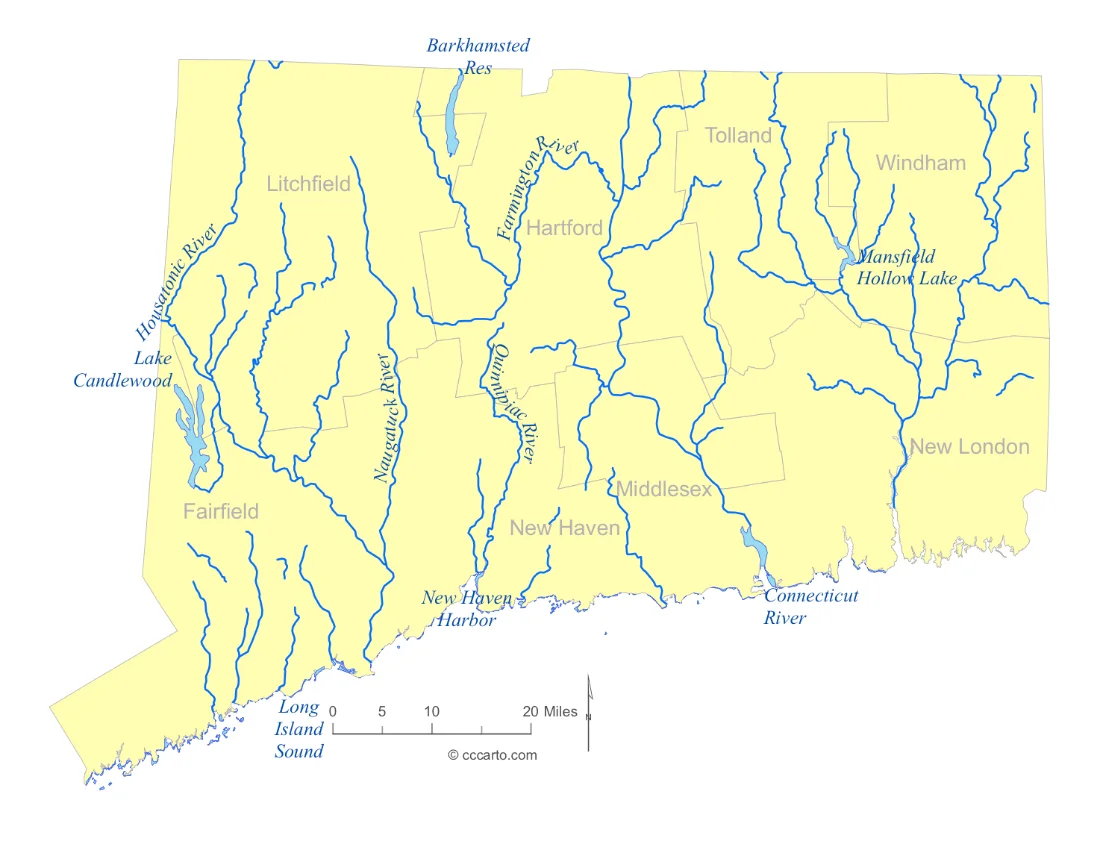
An Overview of Connecticut's Rivers and Lakes
Largest and Most Famous Rivers, Lakes, Reservoirs, and Streams
The largest and most famous rivers in Connecticut include the Connecticut River, which is the state's longest river, flowing from the Massachusetts border to Long Island Sound. Other significant rivers include the Housatonic and Thames Rivers. Notable lakes and reservoirs include Candlewood Lake, which is the largest lake in Connecticut, and Lake Zoar. Streams like the Farmington River are also well-known for their scenic beauty and recreational opportunities.
Sources of Water for Rivers, Lakes, and Streams
The rivers and lakes in Connecticut primarily receive their water from local sources rather than distant mountains. Snowmelt from the local highlands and rainfall are the main contributors to these water bodies. Some rivers, such as the Connecticut River, are fed by smaller streams and rivers within the state. Unlike some states, Connecticut does not rely heavily on distant mountain water sources from other states.
Types of Rivers in Connecticut
Connecticut's rivers include perennial rivers like the Connecticut and Housatonic Rivers, which flow year-round. The state does not have exotic rivers, but it does have tributary rivers like the Farmington River, which feeds into the Connecticut River. Man-made rivers include the Connecticut Aqueduct, used historically for water supply. The rivers are mostly winding, with meanders and bends, adding to their scenic qualities.
Types of Lakes in Connecticut
Connecticut has a variety of lakes, including glacial lakes such as Candlewood Lake, formed by glacial activity. The state does not have volcanic or tectonic lakes. There are anthropogenic lakes like Lake Zoar, created by damming the Housatonic River. There are also some fluvial and landslide lakes, though they are less common.
Direction of River Flow
Rivers in Connecticut generally flow from north to south, with notable exceptions like the Connecticut River, which flows from north to south but has several tributaries flowing east-west. The Housatonic River flows southward into Long Island Sound, while the Thames River flows southeast. The Farmington River also flows southward into the Connecticut River. Overall, the predominant flow direction is north to south.
Natural vs. Man-Made Lakes
Most of Connecticut's lakes are natural, such as Candlewood Lake, though there are several man-made lakes. For instance, Lake Zoar was created by damming the Housatonic River in the early 20th century. State agencies, such as the Connecticut Department of Energy and Environmental Protection, oversee many of these lakes. Federal agencies have also been involved in some lake management and creation projects.
Rivers and Transportation
Rivers in Connecticut are not heavily used for major transportation but do play a role in local transportation and recreation. The Connecticut River, for example, is used for some cargo transport, but it is not a major commercial waterway. Historically, the rivers have supported local industries and transportation, but modern cargo transport relies more on highways and railways. Specific cargo transport statistics for the rivers are not extensively documented.
Dams and Their Uses
Connecticut has several dams, primarily used for flood control, power generation, and recreational purposes. The dams on the Housatonic River and other water bodies help manage flood risks and provide hydroelectric power. They also create reservoirs used for boating, fishing, and other recreational activities. Some dams, such as the Stevenson Dam, are crucial for maintaining water levels and controlling river flows.
Recreational Uses of Rivers and Lakes
Many of Connecticut's rivers, lakes, and reservoirs are popular for recreational activities such as fishing, boating, and kayaking. Candlewood Lake is a prime spot for boating and jet skiing, while the Farmington River is known for kayaking and fly fishing. The Connecticut River also offers opportunities for recreational boating. Reservoirs like Lake Zoar are favored for house boating and other water sports.
Support for Agriculture
Connecticut's lakes and reservoirs do not significantly support the state's agriculture industry directly. However, water resources from rivers and reservoirs may be used for irrigation in some agricultural areas. The state's relatively small agricultural sector relies more on groundwater and municipal water supplies. The impact of water bodies on agriculture is limited compared to other regions with more extensive irrigation needs.
Pollution Issues
Connecticut's rivers and lakes have faced pollution issues, particularly from runoff and industrial discharge. The Connecticut River has experienced pollution from various sources, including agricultural runoff and urban wastewater. Efforts have been made to improve water quality through regulations and clean-up programs. Ongoing monitoring and remediation work continue to address these pollution challenges.