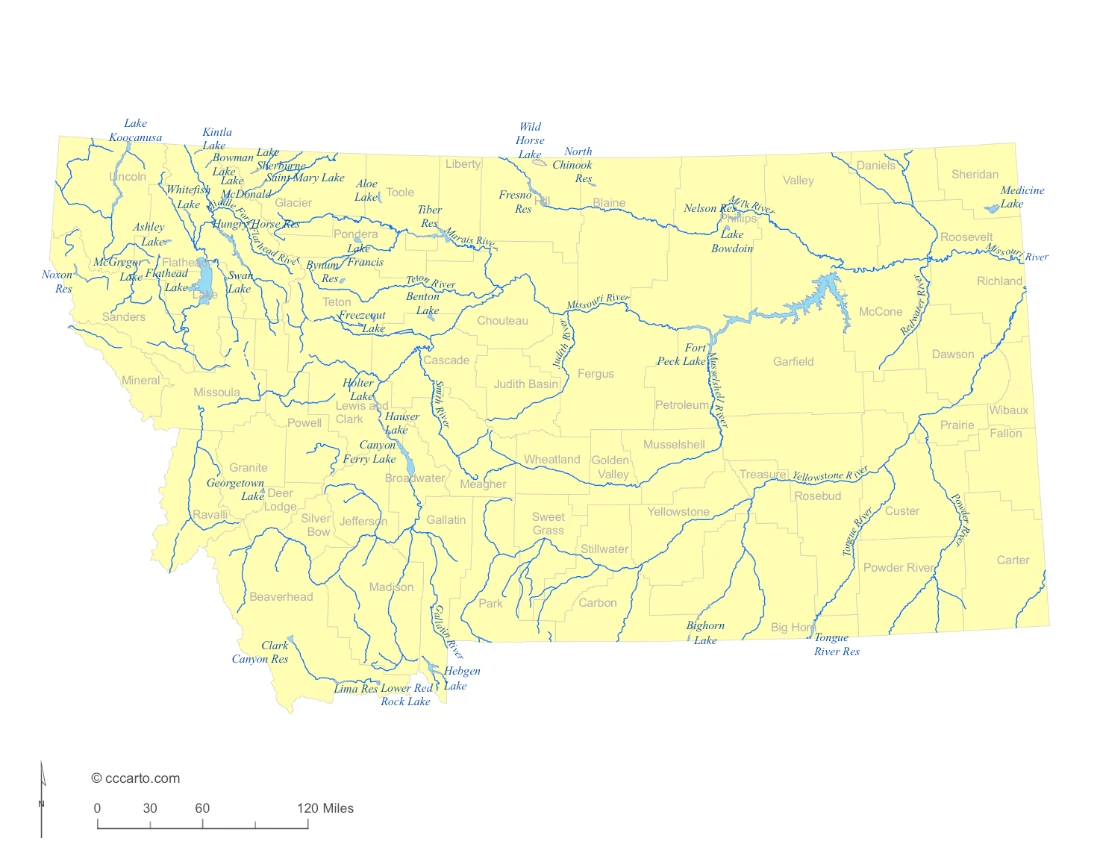
An Overview of Montana's Rivers & Lakes
Largest and Famous Water Features
Montana is home to many significant water features. The Missouri River is one of the most famous, flowing across the state as one of the longest rivers in North America. Flathead Lake, the largest freshwater lake in the western U.S., is another iconic feature. Yellowstone River, known for its scenic beauty, is also one of the longest free-flowing rivers in the country. Fort Peck Reservoir is a massive man-made lake that also stands out for its size and recreational opportunities.
Water Sources of Rivers and Lakes
Montana’s rivers and lakes are primarily fed by local snowmelt from mountain ranges like the Rockies. Rivers such as the Clark Fork and Bitterroot rely heavily on snowpack from Montana’s own mountains. However, the Missouri River also receives water from distant sources, including snowmelt from Wyoming and Colorado. Groundwater sources and spring-fed streams also play a role in sustaining water bodies in drier seasons. Local rainfall supplements water levels during the year.
Types of Major Rivers
Montana has a range of river types. Perennial rivers, like the Yellowstone and Missouri, flow year-round due to consistent water sources. The Jefferson River is an example of a tributary river, feeding into the Missouri. Exotic rivers like the Milk River flow into the state from Canada. Montana also has man-made water channels, such as the Milk River Irrigation Canal, which supports agriculture in the state. Rapid sections can be found on rivers like the Kootenai.
Varieties of Lakes in Montana
Montana features a variety of lake types, particularly glacial lakes like Flathead Lake and Saint Mary Lake. Tectonic lakes are less common, but some lakes in fault zones may have been influenced by tectonic activity. Fluvial lakes, formed by river dynamics, are also present, such as in oxbow lakes along the Yellowstone River. Man-made lakes, like Fort Peck Reservoir, play a major role in the state's landscape. Cirque lakes, or tarns, are also found in higher elevations, such as Iceberg Lake.
Rivers' Flow Directions
Montana’s rivers primarily follow either an east-west or north-south pattern depending on the watershed. The Missouri River flows eastward, draining into the Mississippi River system. The Clark Fork River, on the other hand, flows westward into Idaho before reaching the Columbia River. North-south flowing rivers include the Madison and Gallatin Rivers, which are tributaries of the Missouri. The complex geography of mountain ranges creates diverse river directions.
Natural Versus Man-made Lakes
Montana has a mix of natural and man-made lakes. Many of the state's natural lakes, like Flathead Lake, were formed by glacial activity during the Ice Age. Man-made lakes, such as the Fort Peck Reservoir, were created by federal agencies like the U.S. Army Corps of Engineers. These reservoirs were often built for flood control and hydroelectric power. State agencies have also contributed to the development of smaller reservoirs for irrigation and recreation purposes.
River Transportation and Cargo
Montana’s rivers are not heavily used for transportation of goods, unlike major river systems like the Mississippi. While the Missouri River was historically used for navigation, it does not serve as a major commercial waterway today. The state’s rivers mainly support local transportation by small boats rather than large cargo ships or barges. Limited waterborne cargo statistics exist due to this minimal use. Rail and road networks handle the majority of freight transport across the state.
Dams and Their Uses
Montana has numerous dams, with major examples like the Fort Peck Dam and Hungry Horse Dam. These dams are primarily used for hydroelectric power generation, such as at the Hungry Horse Dam on the South Fork Flathead River. Irrigation is another critical use, especially in agricultural areas that depend on water from reservoirs like Canyon Ferry Lake. Flood control and recreational uses are also common reasons for dam construction in Montana.
Recreational Water Activities
Montana's rivers and lakes offer a wide range of recreational opportunities. Flathead Lake is popular for boating, fishing, and jet skiing, while the Missouri River is known for fishing, kayaking, and fly fishing. Fort Peck Reservoir is a hotspot for house boating, fishing, and water sports. The Blackfoot River, made famous by the book "A River Runs Through It," is a favorite for fly fishing and rafting. Yellowstone River is another top destination for fly fishing, particularly for trout.
Water Features and Agriculture
Montana's rivers and reservoirs are critical to its agricultural industry. The Milk River is essential for irrigating crops in the northern part of the state. Fort Peck Reservoir, through its dam and irrigation canals, provides water to a vast agricultural area. Other rivers like the Yellowstone also support irrigation systems for Montana’s farms. The Clark Fork River supplies water for both agriculture and ranching in western Montana.
Pollution in Rivers and Lakes
Some of Montana’s rivers and lakes have faced pollution challenges over the years. The Clark Fork River, in particular, suffered from heavy metal contamination due to mining activities in the Butte area. Cleanup efforts have been extensive, with the Superfund designation helping to remediate polluted sections. Agricultural runoff has also impacted water quality in rivers like the Yellowstone. Efforts are ongoing to balance water use with environmental protection.