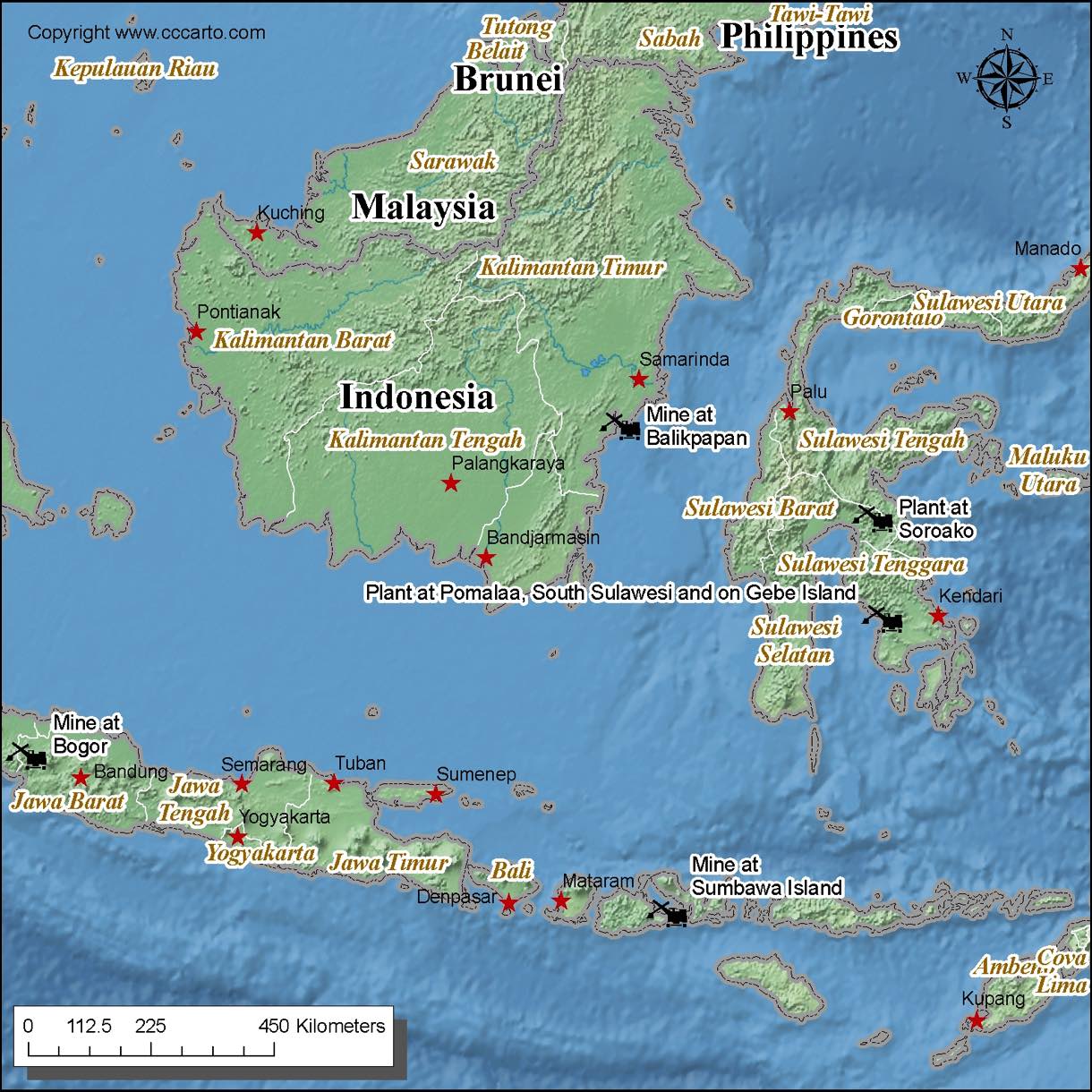
Indonesia Gold Mines Map
Indonesia has a rich history of gold mining dating back centuries. Early mining activities were primarily conducted by local communities, with evidence suggesting that gold was mined as early as the 7th century in Sumatra. The first miners were likely indigenous peoples who utilized simple techniques such as panning and sluicing to extract gold from rivers and streams.
During the colonial period, gold mining in Indonesia came under the control of various foreign entities, including the Dutch East India Company. These entities introduced more organized and mechanized mining methods to increase production efficiency.
Several areas in Indonesia have historically been known for their productive gold mines. Sumatra, Kalimantan (Borneo), Sulawesi, and Papua are among the regions with significant gold deposits.
Major gold mines in Indonesia include:
1. Grasberg Mine: Located in Papua province, it is one of the world's largest gold mines and also produces copper. Gold here is primarily found in porphyry copper-gold deposits.
2. Martabe Mine: Located in North Sumatra, Martabe primarily produces gold-silver doré.
3. Batu Hijau Mine: Located in Sumbawa, Batu Hijau is known for its copper-gold porphyry deposits.
4. Pongkor Mine: Located in West Java, Pongkor has been a significant producer of gold.
5. Gosowong Mine: Located on Halmahera Island, it is known for epithermal gold-silver deposits.
The most successful types of gold mining in Indonesia have varied depending on the deposit types and geological conditions. Historically, river dredging, sluicing, and panning were common in alluvial deposits. In more recent times, underground mining and open-pit mining with advanced techniques such as heap leaching (using cyanide) have become prevalent in large-scale operations like at Grasberg.
Famous and rich gold strikes in Indonesia include discoveries at places like Grasberg (which has yielded massive amounts of gold and copper), Pongkor, and Martabe.
Cities like Timika in Papua have developed around major mining operations, providing infrastructure and employment opportunities related to gold mining.
Gold mined in Indonesia is typically sold through established channels, with a portion being refined domestically and some exported to global markets. It contributes significantly to Indonesia's economy as a valuable export commodity.
Gold miners in Indonesia can earn varying wages depending on their role and the company they work for. Working conditions can vary, with larger mines generally offering better facilities and safety measures.
Environmental costs associated with gold mining in Indonesia include deforestation, habitat destruction, water pollution (especially from mercury and cyanide use), and disruption to local ecosystems.
Several gold mines in Indonesia have closed over the years due to depletion of reserves or economic factors. However, major mines like Grasberg continue to operate and are significant contributors to Indonesia's mining sector.
Source: U.S. Geological Survey, Major mineral deposits of the world, Open-File Report 2005-1294. Data portal