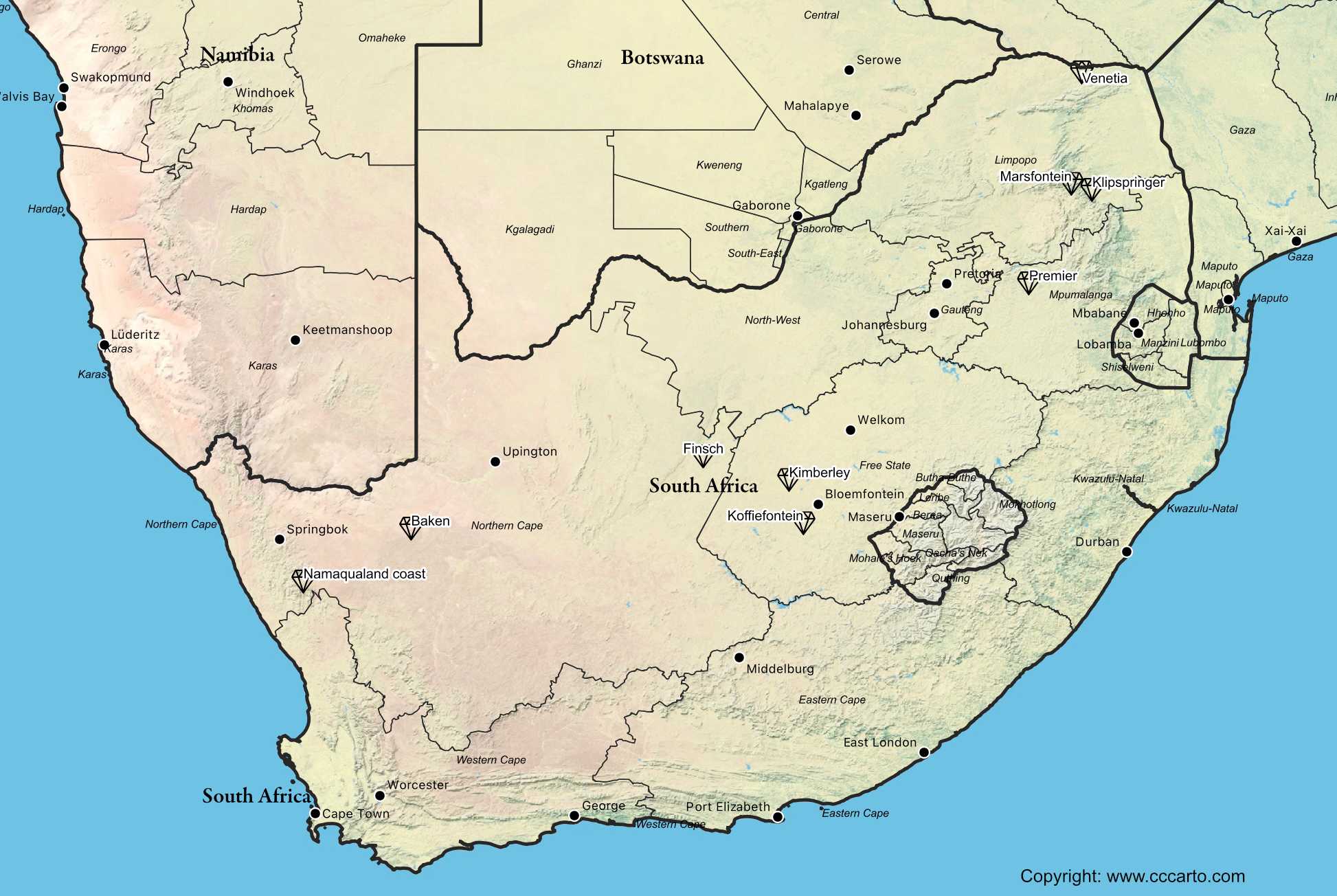
South Africa Historic Diamond Fields & Mines Map
Northern Cape — Kimberley Diamond Fields (Kimberley, Dutoitspan, Bultfontein, Wesselton & De Beers)
South Africa’s modern diamond era began with river finds (1867–1869) on the Orange–Vaal, then shifted in 1871 to the world’s first great kimberlite pipe rush at Kimberley. Five adjacent pipes—Kimberley (the “Big Hole”), Dutoitspan, Bultfontein, Wesselton and De Beers—created an industrial-scale mining district and ultimately the consolidation of claims under De Beers. Open pits later transitioned to deep underground methods as the pipes narrowed at depth. Sources: GIA Africa history (river-to-pipe transition); SAIMM/technical notes on the five Kimberley mines; Big Hole/pipe facts.
Orange & Vaal Rivers — Classic Alluvials (Hopetown, Barkly West, Douglas)
The first documented South African diamonds came from Orange and Vaal River gravels near Hopetown and Barkly West (1867 onward). The 1869 Star of South Africa (found near Hopetown) triggered a rush that prefigured the move to kimberlite pipes. River terraces and palaeochannels along the middle–lower Orange and Vaal continued to yield high-quality stones into the 20th century. Source: GIA historical reading list for the Orange/Vaal discoveries (1867–1871).
Free State — Jagersfontein & Koffiefontein (Deep, Early Pipe Mines)
South of Kimberley, the Free State’s kimberlite pipes at Jagersfontein and Koffiefontein became famed for exceptional “first-water” diamonds. Jagersfontein (open pit then underground) produced historic roughs including the 995 ct Excelsior (1893) and the 650.8 ct Reitz/Jubilee (1895). Koffiefontein’s workings date to 1870; both camps are central to the early deep-pit era that followed Kimberley’s open-cast phase. Sources: Britannica/overviews (Jagersfontein, Excelsior & Reitz/Jubilee); Free State mine summaries.
Gauteng — Premier (Cullinan) Kimberlite Mine
Discovered in 1902 and famed for the 1905 Cullinan rough (3,106 ct), the Premier Mine (now Cullinan) is one of the world’s most storied kimberlites. Today operated by Petra Diamonds, Cullinan is also a leading source of rare Type IIb blue diamonds, with notable blue recoveries in the 2010s–2020s. Mining has progressed from open pit to extensive underground block-cave operations. Sources: Royal Collection Trust (Cullinan facts); Petra Diamonds (modern Cullinan operations & blue-diamond recoveries).
Limpopo — Venetia (De Beers’ Flagship)
Venetia, opened in 1992 near Musina, has been South Africa’s largest producer by value in recent decades. De Beers is transitioning Venetia from open pit to a major underground complex (first underground diamonds reported in 2023), extending life of mine for decades. Sources: De Beers Venetia reports; trade coverage of first underground diamonds (2023).
Northern Cape — Finsch
Finsch (in operation since 1967; underground since 1990) remains one of South Africa’s most significant kimberlite mines, now operated by Petra Diamonds. It exemplifies the long shift of mature pipes to fully underground production supported by modern plants. Source: Petra Diamonds Finsch operation profile.
Free State — Voorspoed (2008–2018)
De Beers reopened Voorspoed in 2008 as a modern open pit in the Kroonstad area, producing until closure and rehabilitation planning announced in 2018. Source: De Beers media release on Voorspoed closure (2018) and industry coverage.
West Coast (Namaqualand) — Coastal & Nearshore Marine
Along the northwest coast (Alexander Bay–Kleinzee–Port Nolloth), state-linked Alexkor and other operators have long exploited beach, surf-zone and nearshore marine placers derived from diamonds swept down the Orange River. South Africa’s west-coast placers are geologically linked to the same Atlantic-margin system that hosts Namibia’s famed offshore fields. Sources: Alexkor corporate overview; GIA Africa history (west-coast marine placers).
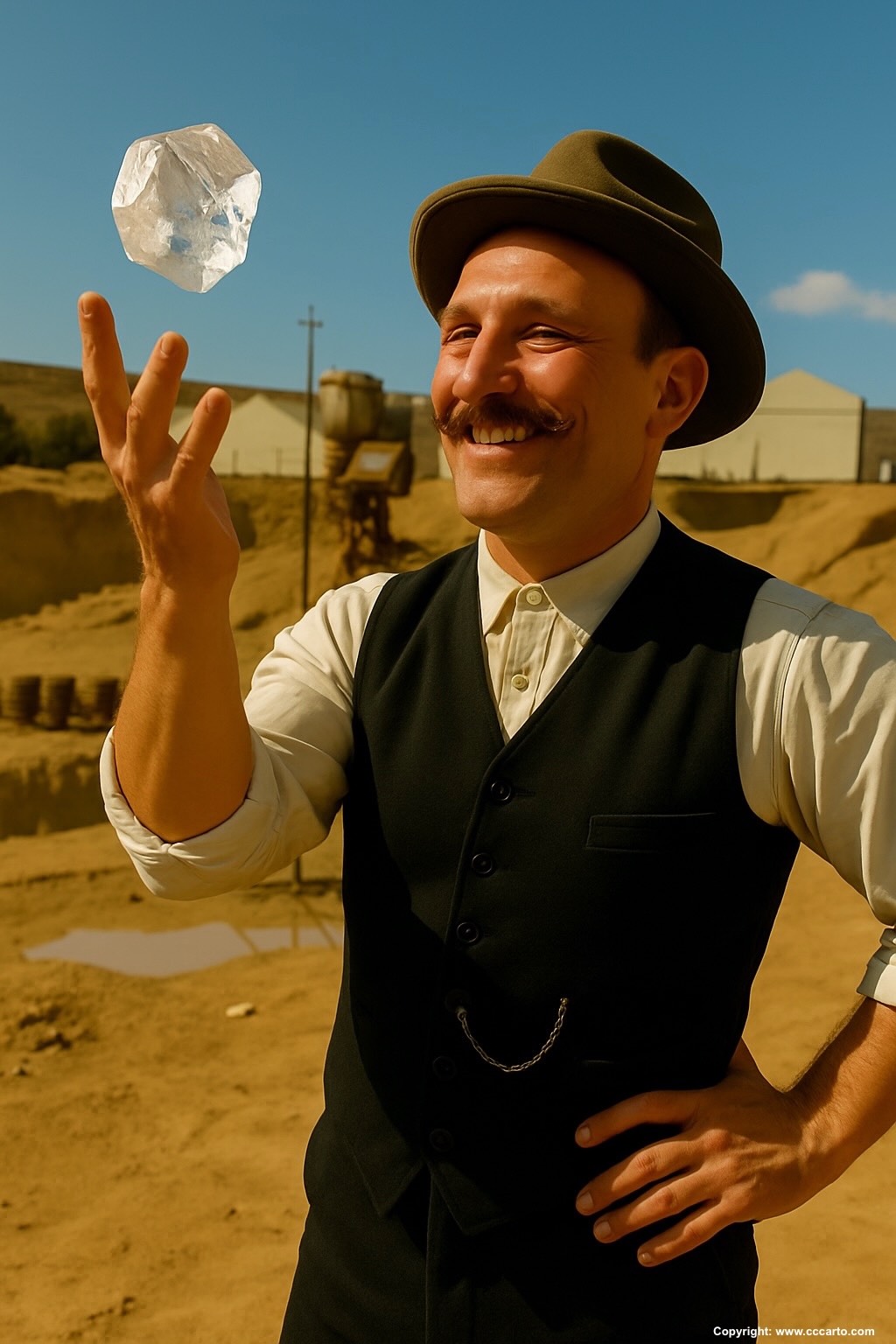
South Africa’s Most Historic & Largest Diamonds
Cullinan Diamond (1905)
Rough: 3,106 ct, recovered at the Premier (Cullinan) mine; gifted to Britain and cut by Asscher into nine principal gems and numerous smaller stones. The largest, Cullinan I (the “Great Star of Africa”), is a 530.2 ct pear in the Sovereign’s Sceptre; Cullinan II is a 317.4 ct cushion in the Imperial State Crown. Sources: Royal Collection Trust Cullinan overview; Wikipedia (supplemental technical details).
Excelsior (1893)
Rough: ~995.2 ct from Jagersfontein; at discovery, the largest known gem-quality diamond. Ultimately fashioned into multiple stones after study in Amsterdam (often cited as 21 gems). Sources: Britannica “Excelsior Diamond”; NaturalDiamonds.com feature; Wikipedia summary.
Jubilee (Reitz) (1895)
Cut weight: 245.35 ct cushion (E, VVS2), from a 650.80 ct rough recovered at Jagersfontein; renamed in 1897 to mark Queen Victoria’s Diamond Jubilee. Sources: GIA blog; Mouawad gallery note; Wikipedia “Jubilee Diamond”.
Golden Jubilee (1985)
Cut weight: 545.67 ct brown, the largest finished cut diamond in the world; discovered at Premier (Cullinan) and later presented to the King of Thailand. Source: Wikipedia “Golden Jubilee Diamond”.
De Beers Centenary (1986 → 1991)
Cut weight: 273.85 ct, D-color, internally flawless; among the most important colorless diamonds from Premier (Cullinan). Source: Wikipedia “Centenary Diamond” (with historical context).
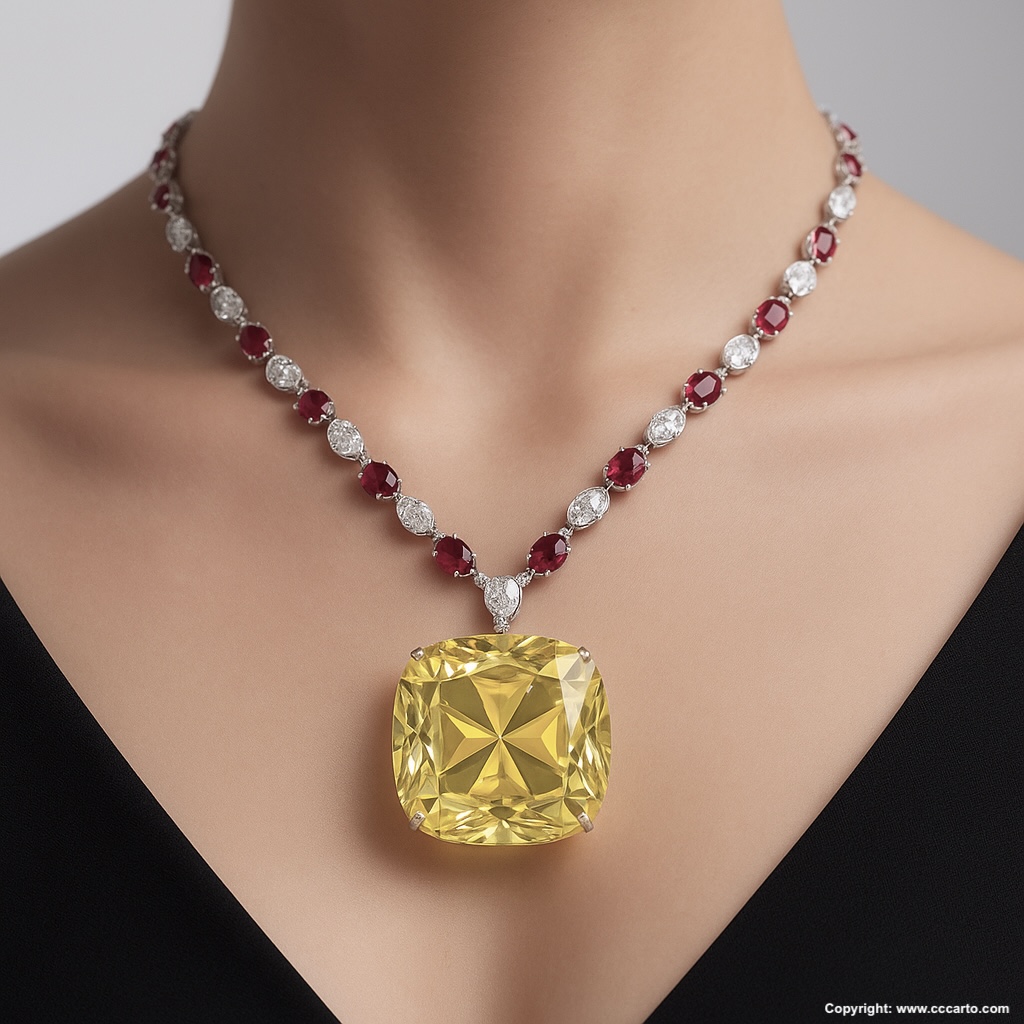
The Red Cross Diamond (1901)
Rough: ≈375 ct from the De Beers–controlled Kimberley Mine (Griqualand West, Cape Colony); cut: 205.07 ct canary/fancy-intense yellow cushion with a distinctive Maltese-cross facet pattern visible through the table. First auctioned in 1918 to benefit the British Red Cross; later reoffered (1973) and sold again in 2022. Sources: Wikipedia “Red Cross Diamond”; Christie’s feature/lot notes; National Jeweler.
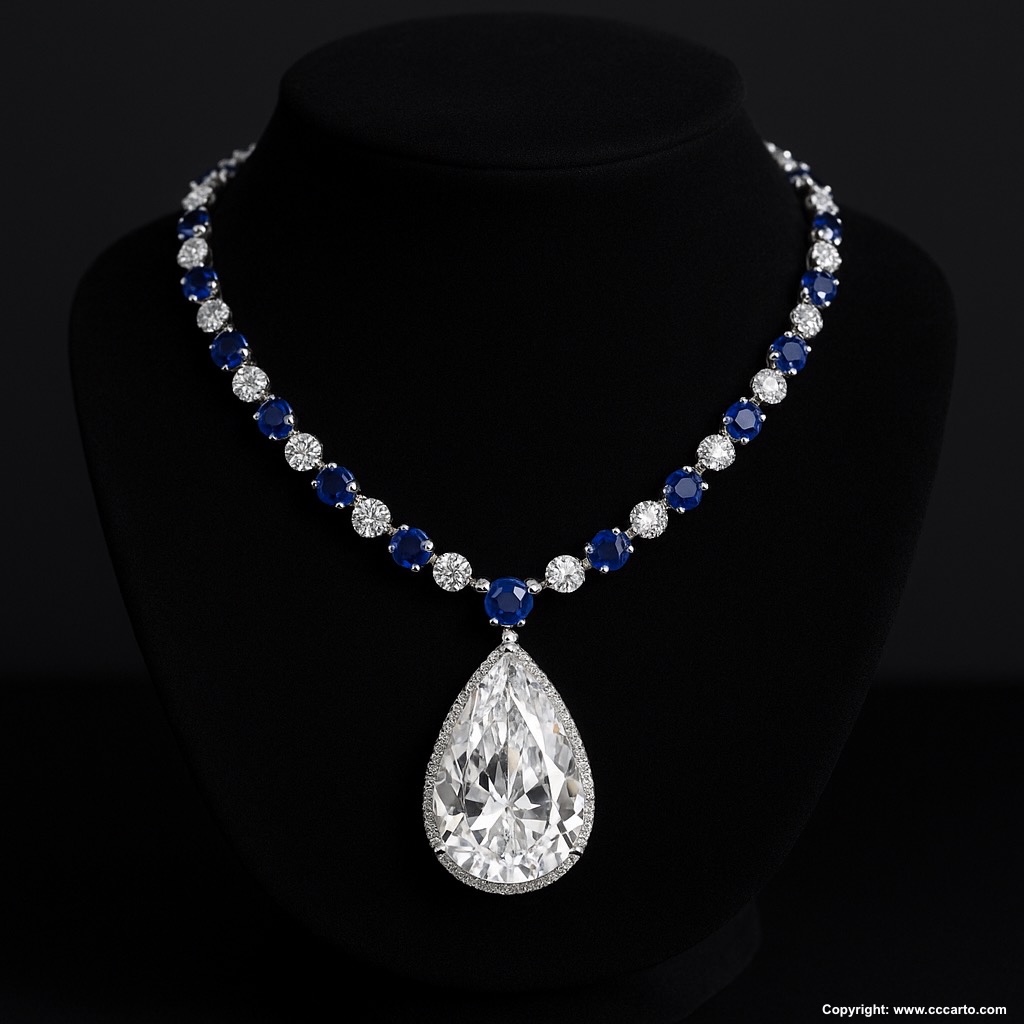
The Rock (2000 → auctioned 2022)
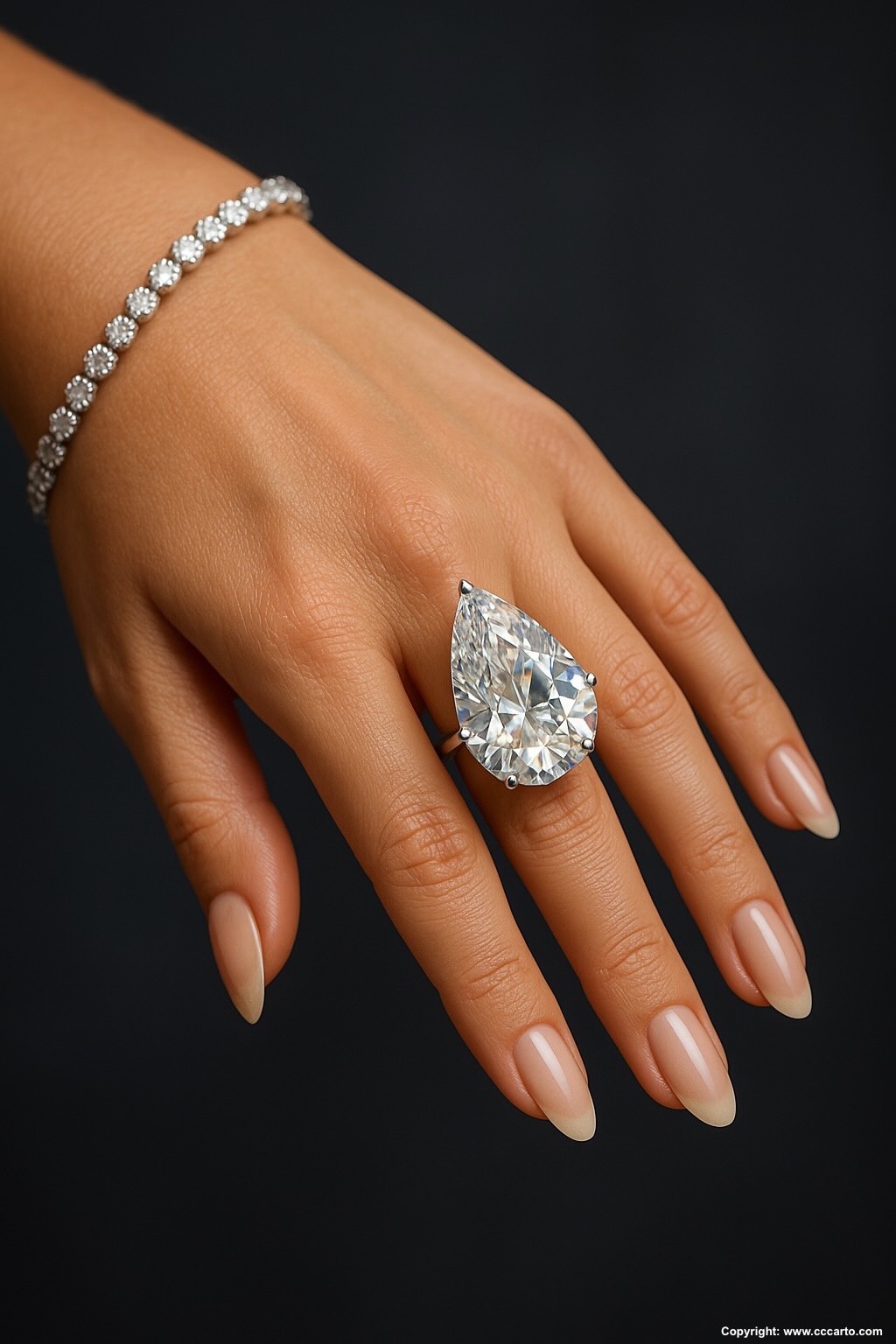
Cut weight: 228.31 ct, G-color, VS1; pear brilliant; the largest white diamond ever auctioned (Christie’s Geneva, 11 May 2022). Sources: Christie’s lot page · GIA Gems & Gemology.
Star of South Africa (1869)
Rough: 83.5 ct alluvial crystal found near Hopetown; cut: 47.69 ct pear (“Dudley Diamond”). Widely credited with igniting the Kimberley-era rush. Sources: Wikipedia “Star of South Africa (diamond)”; museum/trade summaries.
Tiffany Yellow (1878)
Rough: 287.42 ct from the Kimberley mine; cut: 128.54 ct cushion with 82 facets—one of the largest and most famous yellow diamonds. Sources: Wikipedia & Tiffany & Co. profiles.
Taylor–Burton (1966 → 1969)
Cut weight (original): 69.42 ct pear from a 241 ct rough found at Premier (Cullinan); later recut to 68.0 ct. Made famous by Elizabeth Taylor’s necklace setting. Sources: GIA “Taylor–Burton Diamond”; Wikipedia summary; contemporary press.
Blue Moon of Josephine (2014 → 2015)
Cut weight: 12.03 ct, Fancy Vivid Blue, IF; recovered at Cullinan and sold at Sotheby’s Geneva in 2015 for a record price-per-carat for a blue diamond. Sources: Sotheby’s catalogue note & sale report; The Guardian (2015).
Pink Star (1999 → 2003 → 2017)
Cut weight: 59.60 ct, Fancy Vivid Pink, IF; mined by De Beers in South Africa (rough 132.5 ct) and polished over ~2 years; sold for a world-record diamond price in 2017. Sources: Wikipedia “Pink Star (diamond)”; Sotheby’s/press coverage.
Graff Pink
Weight: 24.78 ct. Color/Type: Fancy Intense Pink. Cut/Facets: Emerald-cut. Clarity: Graded at sale; details on lot notes.
Ownership: Sold at Sotheby’s Geneva (2010) for US$46M; owned by Graff; private thereafter.Source: Wikipedia.
Summary
South Africa’s diamond narrative runs from 1860s Orange–Vaal alluvials to Kimberley’s pioneering pipe mines, then to deep, mechanized kimberlite operations such as Cullinan, Finsch and Venetia. The country produced many of history’s benchmark stones—Cullinan, Excelsior, Jubilee, the Tiffany Yellow, and more—while coastal Namaqualand placers remain a parallel chapter in an Atlantic-margin system shared with Namibia. Primary references: GIA Africa history; mine operator reports; museum/auction records cited above.
For information on famous diamonds, visit our Diamond Page.Datasets: U.S. Geological Survey, Major Mineral Deposits of the World, Open-File Report 2005-1294. Data portal