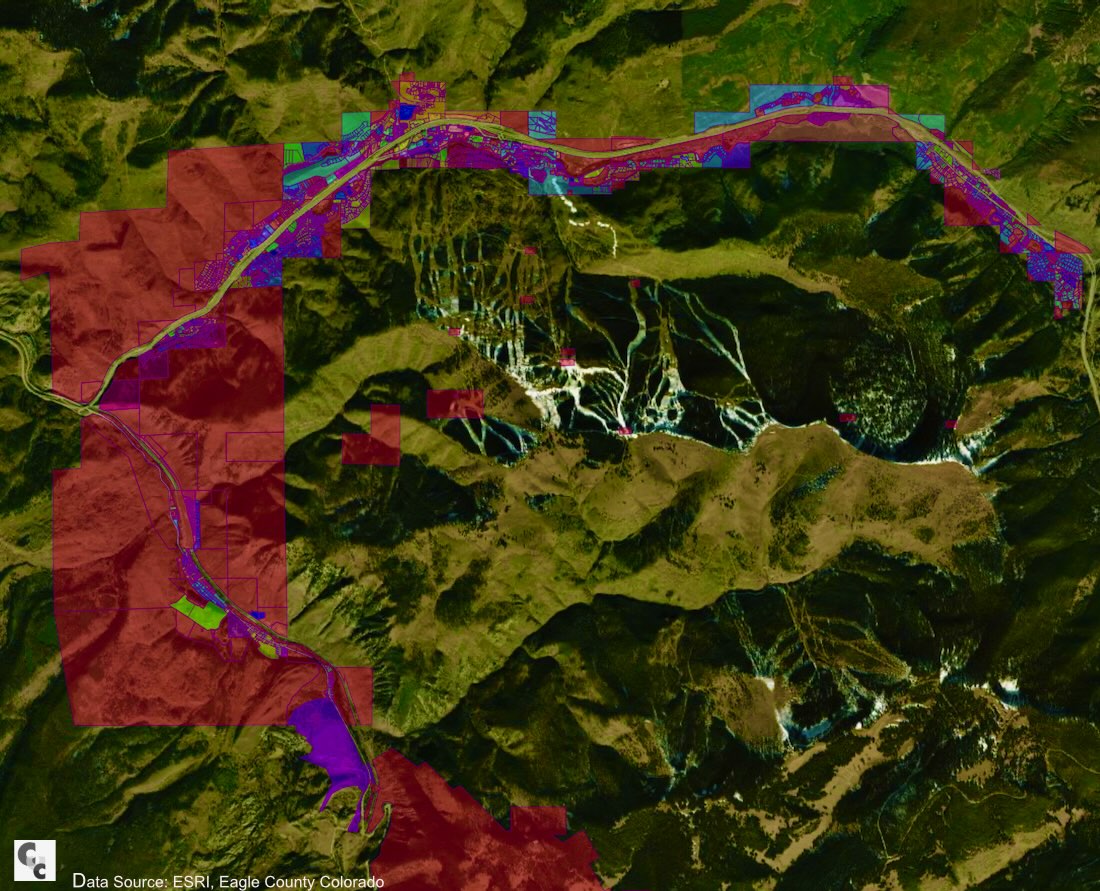
Vail, Colorado Condominiums – History, Trends, and Future Pressures
Early Condo Development in Vail (1960s–1980s)
Vail is a purpose-built ski resort town that opened for skiing in December 1962. From the beginning, condominiums were a core part of the resort’s financing and lodging model. Early investors in the new ski area were offered a condominium unit and a lifetime season pass for $10,000, and construction crews spent the summer of 1962 building base facilities, lifts, and the first condos around the fledgling Vail Village at the base of the original gondola and chairlifts along Gore Creek.
By the mid-1960s, dedicated condominium buildings and condo-hotels began to define the village streetscape. All Seasons Condominiums along Gore Creek Drive in Vail Village date to around 1965, and Manor Vail, near what is now the Golden Peak base, is often cited as one of the first condominium resort properties in Colorado, opening in the mid-1960s with studios and condo units operated as a lodge. These early projects established the pattern of ski-in/ski-near condos clustered close to lifts, shops, and restaurants.
Through the 1970s and 1980s, condominium construction expanded westward with the creation of Lionshead Village, and outward into East Vail, West Vail, and Sandstone. Many of the buildings from this era have since been renovated, re-skinned, or converted into higher-end “condotels,” but the underlying condo platting still dates back to this first wave of development.
Where Condos Are Located Today
Most Vail condominiums are concentrated in a few distinct areas:
Vail Village: Dense, walkable blocks along Gore Creek and Bridge Street with mid-1960s to 1980s condo buildings such as All Seasons, Village Center, Intermountain-style lodges, and mixed-use condo projects over retail.
Lionshead Village: A slightly newer pedestrian village west of Vail Village, with 1970s–1980s condo buildings and several major redevelopments, including modern luxury projects such as The Lion, which opened in the late 2010s as a high-end condo building near the Eagle Bahn Gondola.
East and West Vail: Smaller, more residential condo, townhouse, and duplex clusters along I-70 and the frontage roads, often used as a mix of local housing and second homes.
Recent condominium-style construction has been focused less on new greenfield sites and more on infill, redevelopment, and workforce housing:
Solaris in Vail Village consolidated older buildings into a large mixed-use project with luxury condos over retail and entertainment space.
Residences at Main Vail (opened in the early 2020s) added 72 deed-restricted apartments just west of the main village, reserved for local workers.
Timber Ridge Village in West Vail is an ongoing redevelopment of aging apartments into roughly 300 deed-restricted condo-style units for local employees, built with modular construction and modern energy-efficiency standards.
Approximate Number of Condo and Townhouse Units
The Town of Vail has roughly 7,100 housing units in total. Demographic analyses indicate that only around 15% are detached single-family homes, while nearly 80% are in large apartment/condo buildings, rowhouses, or other attached forms. That implies on the order of 4,000–5,000 condominium, townhouse, and similar multi-unit properties within the town limits, many of them clustered in Vail Village, Lionshead, and along the frontage roads.
In addition, Vail’s housing plans call for hundreds more multi-family units in deed-restricted workforce projects such as Residences at Main Vail and Timber Ridge Village, which function much like condominium buildings even when units are held as long-term rentals rather than individually sold.
Condo Prices: Then and Now
When Vail first opened, early investors could acquire a condo unit and a lifetime season pass for about $10,000 in the early 1960s. Adjusted for inflation, that is roughly equivalent to around $100,000 today, illustrating how comparatively accessible early ski-area condos were for middle-class buyers.
By the late 20th century, prices had climbed significantly. A one-bedroom condominium in a 1965 Vail Village building such as All Seasons sold for around $147,000 in 2000, or roughly $300 per square foot at that time. Similar units in the same complex today are estimated in the $1–3 million range, with some resales above $3,000 per square foot after extensive remodeling.
As of 2025, market data for Vail shows:
A median sale price around $1.8–1.9 million for all housing types in the Vail ZIP code, with a median price per square foot around $1,000–$1,050.
Premium Vail Village and Lionshead condos frequently trading at $1,400–1,700 per square foot or more, especially in luxury mixed-use projects.
Deed-restricted workforce condos, such as those in Timber Ridge Village, priced roughly in the $400,000–$1,000,000 range depending on size, reflecting a separate, policy-driven segment of the market.
Overall, a typical market-rate condo in central Vail now sells for an order of magnitude more in nominal dollars than the earliest units did in the 1960s, and far more in real (inflation-adjusted) terms.
Environmental Footprint: Condos vs. Large Detached Homes
Multi-family housing such as condos generally uses less energy per household than large detached homes. U.S. Energy Information Administration data show that apartments in buildings with five or more units consume less than half as much energy per household as detached single-family homes on average, mainly because they share walls and roofs and have smaller average floor areas. Analyses for the Environmental Protection Agency likewise find that compact, multi-family housing in walkable locations tends to have significantly lower combined building and transportation energy use than large houses in auto-dependent areas.
A typical Vail condominium of 800–1,500 square feet therefore tends to have a much smaller energy and materials footprint than a 7,000-square-foot luxury home, especially when sharing walls, parking, and infrastructure. However, high-end condos with extensive glazing, hot tubs, and year-round climate control can still be energy-intensive, and frequent long-distance travel to and from resort properties remains a significant part of total climate impact. From a land-use standpoint, concentrating lodging in condominium buildings also reduces the amount of land that must be cleared, landscaped, plowed, and serviced with roads and utilities compared to the same number of beds in very large detached homes.
Changes in Regulations Since the First Condos
The earliest Vail condominiums were built under relatively simple county building and zoning rules, focused on snow loads, basic fire safety, and water/sewer connections. Since then, regulatory frameworks have become much more extensive:
Modern building codes: Vail now builds under current international building, energy, plumbing, and fire codes, which incorporate seismic and snow-load requirements, advanced fire suppression, and significantly higher insulation and efficiency standards than those required in the 1960s.
Energy and climate policies: The Town of Vail and Eagle County have adopted a Climate Action Plan targeting large greenhouse-gas reductions by 2030 and 2050, influencing building design, electrification, and waste diversion goals for new multi-family projects.
Housing and deed-restriction programs: The Vail Housing 2027 plan and the Vail InDEED program use zoning tools, financial incentives, and deed restrictions to secure homes for local workers, including new condo-style developments such as Residences at Main Vail and Timber Ridge Village.
Environmental and wildlife protections: Reviews now routinely address wildlife habitat, riparian corridors, and slope stability. A high-profile example is the Booth Heights parcel in East Vail, where plans for workforce housing were ultimately blocked and the land purchased to protect critical bighorn sheep winter habitat.
Short-term rental regulation and taxation: Vail licenses short-term rentals (STRs), tracks their impacts, and has considered new excise taxes on STR income to fund workforce housing. A 2025 ballot measure to add a 6% STR excise tax was narrowly defeated, illustrating how regulation of condo use has become an active political issue.
Condo Use as Short-Term and Long-Term Rentals
Condominiums are central to Vail’s visitor lodging base. Many buildings are operated as “condotels,” where individually owned units participate in a common hotel-style rental pool. Others are self-managed as short-term rentals on platforms such as Airbnb and Vrbo, or leased seasonally to ski workers.
Vacation-rental analytics estimate that Vail has on the order of 1,100+ active Airbnb listings, with an average occupancy of around 55% and average daily rates near $450–$500 per night in recent years. Town documents and housing plans note a “prevalence of short-term rentals” as a key factor affecting local housing supply and costs, prompting efforts to channel some revenue back into deed-restricted units for residents.
Given very high carrying costs (purchase price, HOA dues, taxes, and management), a substantial share of Vail condo, townhouse, and duplex owners rely on some form of rental income—short-term or long-term—to offset expenses, even when the property is primarily a second home.
Key Risks to Future Condo Development
Several interacting forces shape the future of condominium development in Vail:
Land scarcity and environmental constraints: Vail is hemmed in by steep mountainsides, I-70, and public lands. Most easily developed sites are already built out, and remaining parcels often overlap with important wildlife habitat or steep, sensitive terrain. The Booth Heights bighorn sheep case in East Vail highlights how conservation concerns can stop new multi-family projects even when housing demand is high.
Climate change and snow reliability: Climate studies and EPA analyses project shorter ski seasons and declining snowpack across Colorado over the coming decades, with more winter precipitation falling as rain rather than snow, even in high-elevation resorts. While Vail’s elevation helps maintain relatively reliable snow compared with lower mountains, long-term warming still threatens ski visitation, which underpins condo values and the economics of future development.
Wildfire, water, sewage, and waste: The broader Colorado Rockies are facing hotter, drier summers and rising wildfire risk, and headwaters regions are grappling with snowpack-dependent water supplies. Additional condo development must fit within the capacity of regional water and wastewater systems and comply with ambitious waste-reduction and climate targets set by Eagle County and Vail.
Over-development and community character: Many long-time residents and local organizations express concern about high-rise forms, shading, and congestion, especially in workforce-housing proposals. Debates over height, massing, and design standards can slow or reshape condo projects, particularly in already dense parts of Vail Village and Lionshead.
Housing affordability and resort cost structure: As real-estate prices, lift tickets, and restaurant costs climb, there is ongoing debate about whether the resort economy is pricing out both workers and some segments of visitors. Local and state housing plans emphasize the need for more affordable, deed-restricted units; without solutions, political pressure may limit new second-home condos or impose tighter STR regulations.
Overall, Vail’s condominium landscape has evolved from a small collection of base-area units used to finance a new ski hill into a mature, highly regulated, and extremely valuable mix of luxury residences and workforce housing. Future development is likely to focus on redevelopment and densification of existing sites, tight integration with climate and wildlife goals, and an increasingly careful balance between visitor lodging, local housing needs, and the environmental limits of a high-alpine valley.
Sources
Colorado Ski History – “History of Vail” (early investors, 1962 construction of lifts and condos).
Manor Vail & hospitality trade articles – descriptions of Manor Vail as an early condominium resort in Colorado.
Vail Village property records and listings for All Seasons Condominiums (1965 build date and resale prices).
Demographic and housing profiles for the Town of Vail (share of multi-family vs. single-family housing).
Town of Vail – Housing Department, “Housing 2027” plan and Vail InDEED program documents.
Town of Vail – project pages for Residences at Main Vail and Timber Ridge Village workforce housing.
Redfin, Zillow, and local real-estate market reports – current median prices and price per square foot in Vail.
EIA Residential Energy Consumption Survey and EPA reports on location efficiency and housing type – relative energy use of multi-family vs. detached homes.
Airbtics and similar analytics – statistics on active Airbnb listings, occupancy, and nightly rates in Vail.
Town of Vail and Colorado Sun reporting on Booth Heights, bighorn sheep habitat protection, and housing conflicts.
EPA, NOAA, and academic studies on climate change impacts on Colorado snowpack and ski season length.
Eagle County and Town of Vail Climate Action Plan and sustainability reports.
Data source:
County(s) Parcel Data
cccarto.com is NOT responsible for location and entry errors, omissions or out of date data.