
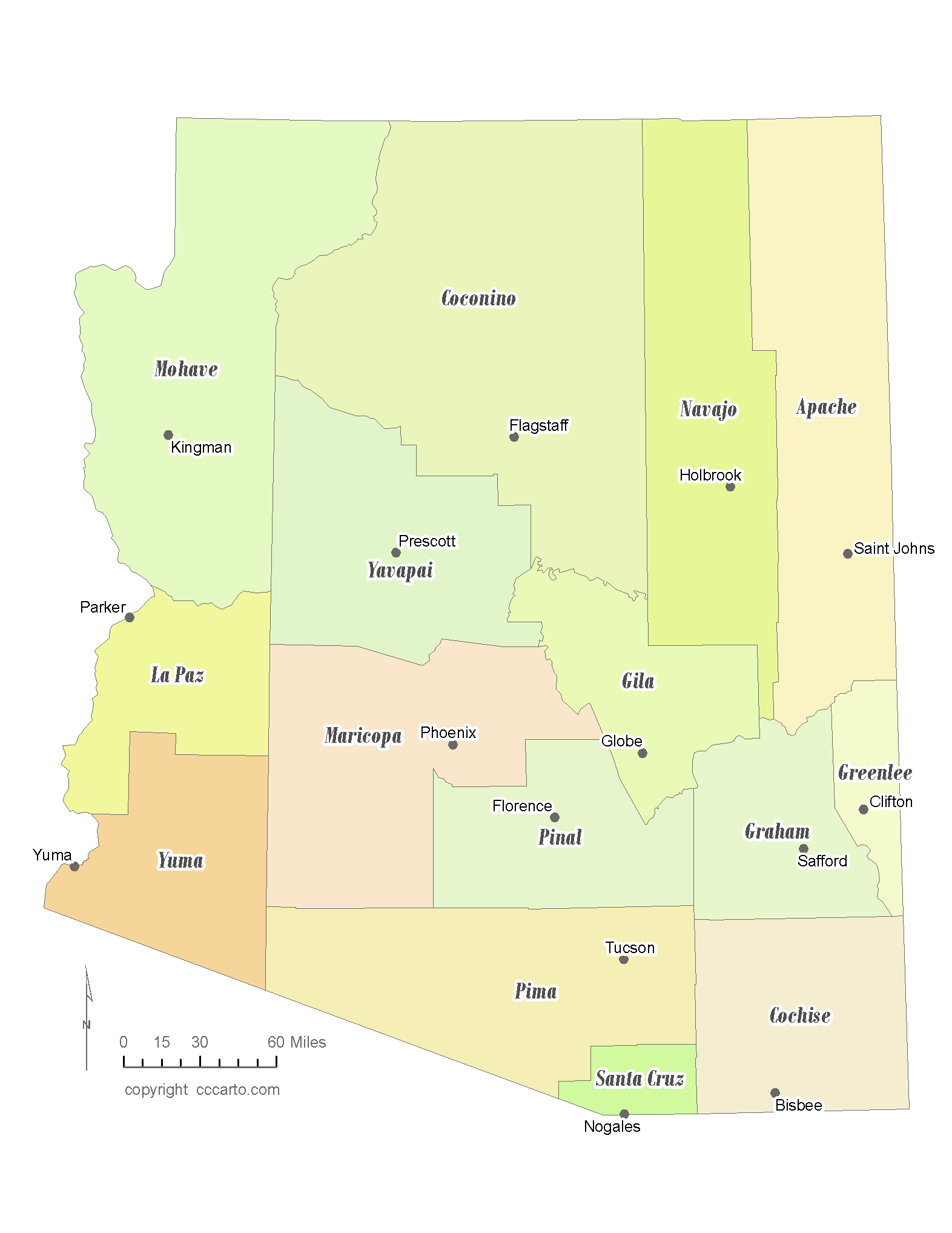
Arizona County Seats
Bisbee – Cochise County Seat
Bisbee was once one of the richest mining towns in the American West, booming with copper, silver, and gold in the late 19th century. Today, its historic streets wind through the Mule Mountains, lined with preserved Victorian homes and old saloons. Visitors can explore the Queen Mine Tour, wander through art galleries, and photograph colorful hillside neighborhoods stacked tightly along narrow streets. The old mining headframes and panoramic views from Mule Pass make great photo stops.
Clifton – Greenlee County Seat
Clifton grew out of Arizona’s copper industry, tied closely to the Morenci Mine. Its early history includes rough mining camps and a mix of cultures drawn to the area for work. The town’s historic district still has 19th-century buildings, an old railroad trestle, and vintage murals. Photographers will find interest in the rugged canyon setting along the San Francisco River and the nearby open-pit mine that defines the region’s economy.
Flagstaff – Coconino County Seat
Flagstaff developed as a railroad and lumber town in the late 1800s, later thriving as a hub for Route 66 travelers. Today, it is known as a gateway to the San Francisco Peaks and the Grand Canyon. Visitors can stroll the historic downtown with brick buildings, brewpubs, and murals, or photograph Lowell Observatory and its historic telescopes. Autumn brings golden aspen groves, while winter transforms the town into a snowy mountain retreat.
Florence – Pinal County Seat
Founded in 1866, Florence is one of Arizona’s oldest towns, known for its preserved adobe and Victorian architecture. It has long been the county seat and once served as a trading post for miners and settlers. Visitors can see the Pinal County Historical Museum, explore the old courthouse, and photograph the San Carlos River bridge. The town’s heritage square and historic district provide excellent shots of old Arizona architecture.
Globe – Gila County Seat
Globe began as a mining camp in the 1870s, fueled by silver and later copper. Its downtown still shows that legacy, with stone and brick commercial buildings dating back more than a century. The Gila County Courthouse and Holy Angels Catholic Church are landmarks worth photographing. The rugged landscapes around Globe, including the Pinal Mountains and nearby Tonto National Monument cliff dwellings, offer dramatic photo opportunities.
Holbrook – Navajo County Seat
Holbrook rose to prominence as a railroad town and later became a key stop along Route 66. Known for its Wild West history of lawlessness, the town eventually became a quiet county seat. Today, travelers stop to see Petrified Forest National Park nearby, or to photograph quirky roadside icons like the Wigwam Motel. The old courthouse and murals add to the town’s visual character.
Kingman – Mohave County Seat
Kingman developed as a railroad and mining hub in the 1880s, later becoming a popular Route 66 stop. Its history is tied to transportation and the military, with World War II airfields nearby. The Historic Route 66 Museum, old locomotive displays, and downtown murals are highlights for photographers. Surrounding desert landscapes and views of the Hualapai Mountains also provide striking images.
Nogales – Santa Cruz County Seat
Nogales sits on the U.S.–Mexico border and has long been a center of trade and cultural exchange. Founded in the late 1800s, it grew with the arrival of the railroad. Visitors can explore the historic downtown, photograph the old courthouse, and experience cross-border culture through food and music. Nogales’ colorful markets and border fence murals make for unique photography subjects.
Parker – La Paz County Seat
Parker was founded with the construction of the railroad and later grew with Colorado River farming and recreation. As the county seat, it serves as a small but important desert hub. Photographers will enjoy views of the river, the Parker Dam, and the surrounding desert mountains. Boating and water sports on the river add to its appeal for visitors looking for scenic shots.
Phoenix – Maricopa County Seat
Phoenix began as an agricultural community supported by canals built on ancient Hohokam systems. It became Arizona’s capital and largest city, booming with post-war growth. Today, Phoenix is known for its modern skyline, desert gardens, and cultural museums. Top sites for photography include the Arizona State Capitol, Desert Botanical Garden, and panoramic views from South Mountain or Camelback Mountain.
Prescott – Yavapai County Seat
Prescott was Arizona’s original territorial capital in 1864, with a long history tied to mining and ranching. The historic Whiskey Row saloons and the Yavapai County Courthouse square are must-see landmarks. Photographers can capture Victorian homes, pine forests, and nearby lakes such as Watson Lake with its granite dells. The city’s old-west charm is still alive in its preserved downtown.
Safford – Graham County Seat
Safford grew out of agriculture in the Gila River Valley, with cotton and citrus farming shaping its economy. The town became the county seat in the 1880s. Visitors can photograph the historic courthouse, surrounding farmland, and views of nearby Mount Graham. The mountain’s telescopes and alpine scenery contrast with the desert valley below, making for diverse photo opportunities.
Saint Johns – Apache County Seat
Saint Johns was settled in the late 1800s by Mormon pioneers and Hispanic ranching families. It became the county seat for Apache County, serving as a quiet ranching and farming town. The historic courthouse and small-town main street reflect its heritage. Photographers will find interest in open grasslands, historic churches, and the wide Arizona skies that dominate the horizon.
Tucson – Pima County Seat
Tucson is one of the oldest continually inhabited areas in the United States, with Native American, Spanish, and Mexican roots. Founded as a Spanish presidio in 1775, it grew into Arizona’s second-largest city. Visitors can explore Mission San Xavier del Bac, historic adobe barrios, and the University of Arizona. Surrounding desert landscapes, including Saguaro National Park, provide iconic photography opportunities.
Yuma – Yuma County Seat
Yuma has been a Colorado River crossing point for centuries, used first by Native peoples and later by explorers and settlers. It became a military post and later a hub for farming thanks to irrigation. Today, visitors can explore the Yuma Territorial Prison State Park, photograph the old river bridge, and enjoy scenic views of the river. The desert sunsets and winter light make Yuma a favorite spot for photography.
Canadian Snowbirds and Arizona County Seats: Economic Impact & 2025–2026 Decline
Arizona has long been one of North America's premier snowbird destinations, attracting hundreds of thousands of Canadian retirees each winter to warm desert communities. Canadian visitors spend an estimated $1.5 billion annually in Arizona — and that figure climbs even higher when second-home ownership is included. Several Arizona county seats are particularly dependent on this seasonal influx, and the ongoing Canada–U.S. travel tensions that began in early 2025 are reshaping the winter economy across the state.
The 2025–2026 Decline in Canadian Tourism
Arizona saw Canadian visitation fall roughly 22% in 2025, with approximately 664,000 Canadians visiting the state — about 188,000 fewer than the prior year. The decline stems from several converging forces: a weaker Canadian dollar, U.S. tariffs on Canadian goods, President Trump's repeated suggestions that Canada become the "51st state," new U.S. registration requirements for stays exceeding 30 days, and a broader sentiment shift among Canadians who no longer see the U.S. as a frictionless winter escape. Multiple Canadian airlines have cut capacity on U.S. routes and redirected flights toward Mexico and the Caribbean.
Arizona County Seats Most Affected
Yuma (Yuma County) — Yuma is arguably the Arizona county seat most reliant on Canadian snowbirds. The city's RV parks, golf courses, restaurants, and retail businesses spike dramatically in winter, and a significant share of that seasonal demand comes from Canadian visitors. Local residents and business owners reported noticeably fewer Canadians during the 2025–2026 winter season, with some regulars simply not returning due to trade tensions and border uncertainty.
Kingman (Mohave County) — Mohave County's communities along the Colorado River, including areas near Kingman, draw large numbers of winter visitors from Canada. RV parks and riverside resort communities throughout the county experience real revenue shortfalls when Canadian arrivals drop.
Parker (La Paz County) — Parker and La Paz County are highly reliant on winter tourism tied to Colorado River recreation. Canadian snowbirds are a core part of the seasonal visitor base, and the county's small year-round population means the economic impact of fewer winter visitors is disproportionately felt.
Prescott (Yavapai County) — Prescott attracts Canadian snowbirds who prefer a cooler, pine-forested alternative to the low desert. Its historic downtown, Victorian neighborhoods, and mild winters have made it a long-standing favorite. Yavapai County also has significant Canadian-owned real estate, particularly in communities like Prescott Valley and Dewey.
Phoenix (Maricopa County) and Tucson (Pima County) — Arizona's two largest metro areas feel the impact at scale. Canadians rank among the largest foreign property owners in Arizona, with heavy concentrations in Scottsdale, Mesa, Surprise, Glendale, and Tucson. The Canada Arizona Business Council estimates that Canadians own tens of thousands of residential properties across Maricopa, Pima, and Pinal counties, and the presence of Canadian financial institutions like RBC and BMO within the state reflects how deeply integrated Canadian economic life has become in Arizona.
What's Being Done
Arizona Senators Ruben Gallego and Mark Kelly reintroduced the Canadian Snowbird Visa Act in 2025, which would allow Canadians age 50 and older to stay in the U.S. up to 240 days per year without a visa — up from the current 182-day limit. Proponents argue the bill would help stabilize the winter economies of snowbird-dependent communities. As of mid-2026, the legislation has stalled in Congress despite broad bipartisan support. Meanwhile, airline Porter introduced new seasonal routes between Phoenix and Canada, signaling continued private-sector optimism about the long-term relationship.
- Bisbee — Cochise County Seat
- Clifton — Greenlee County Seat
- Flagstaff — Coconino County Seat
- Florence — Pinal County Seat
- Globe — Gila County Seat
- Holbrook — Navajo County Seat
- Kingman — Mohave County Seat
- Nogales — Santa Cruz County Seat
- Parker — La Paz County Seat
- Phoenix — Maricopa County Seat
- Prescott — Yavapai County Seat
- Safford — Graham County Seat
- St. Johns — Apache County Seat
- Tucson — Pima County Seat
- Yuma — Yuma County Seat