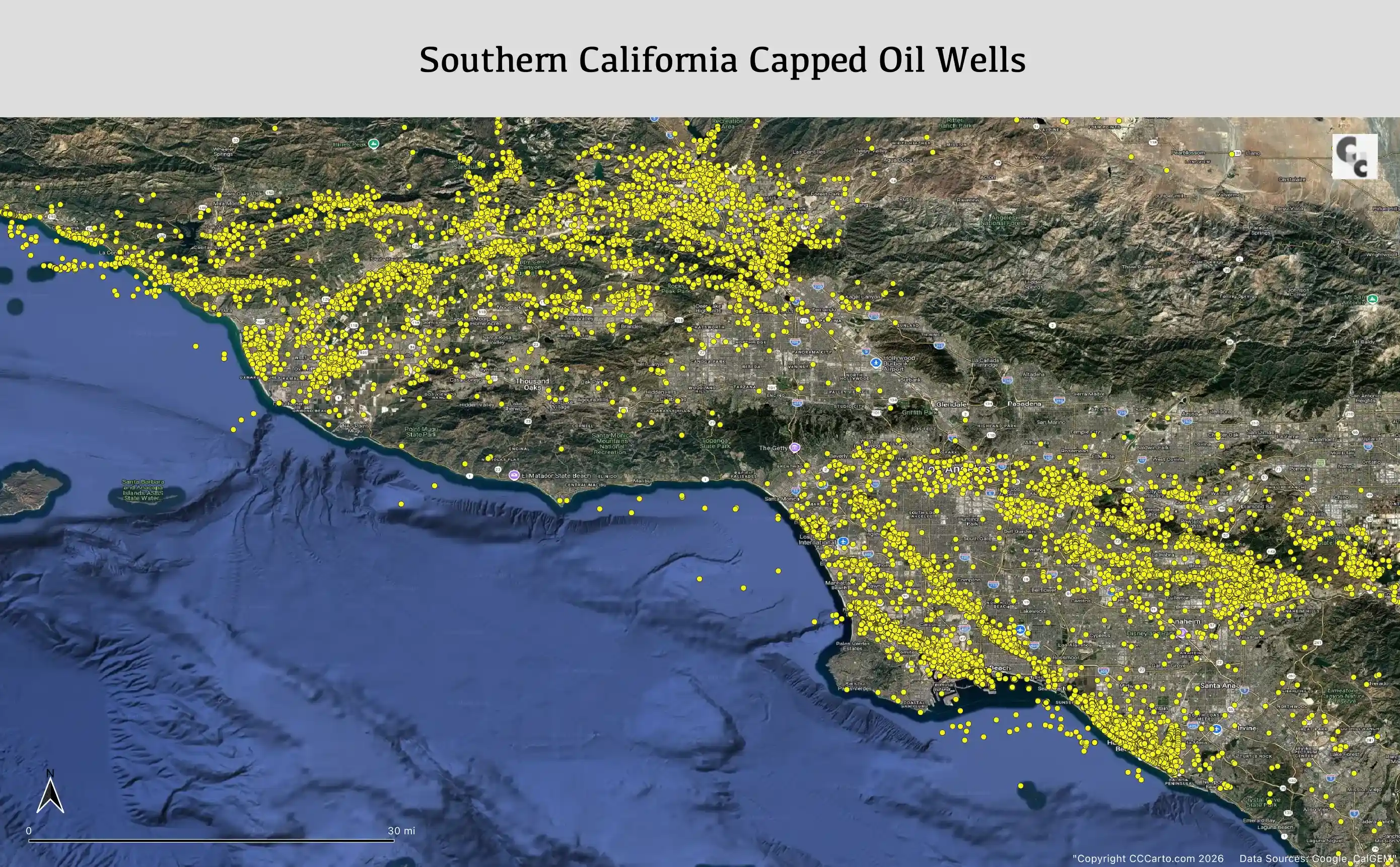


The early history of petroleum exploration in Los Angeles and Southern California is marked by a series of massive discoveries that transformed the region into a global oil powerhouse. While California's first commercially successful well was drilled in 1865 near Pico Canyon—kickstarting the state's industry—it was the explosive discoveries within the Los Angeles Basin during the late 19th and early 20th centuries that set off a true frenzy.
One of the most consequential figures in early Los Angeles oil was Edward L. Doheny. A former prospector who had spent 20 years searching for gold and silver in the Southwest with little luck, Doheny arrived in Los Angeles in 1892. After noticing wagon drivers hauling "brea" (tar) from the local pits to be burned as fuel, Doheny and his partner Charles A. Canfield leased a plot of land near modern-day Westlake Park.
Using a sharpened log, they dug a 275-foot shaft and struck oil. This discovery well, affectionately known as "Old Betsy," produced 45 barrels a day and proved that Los Angeles sat atop massive, easily accessible petroleum reserves. Doheny's success set off a wild rush; within just a few years, over 3,000 wells dotted the city. Doheny went on to build a vast international empire, expanding his operations into Mexico and amassing a fortune that briefly made him richer than John D. Rockefeller.
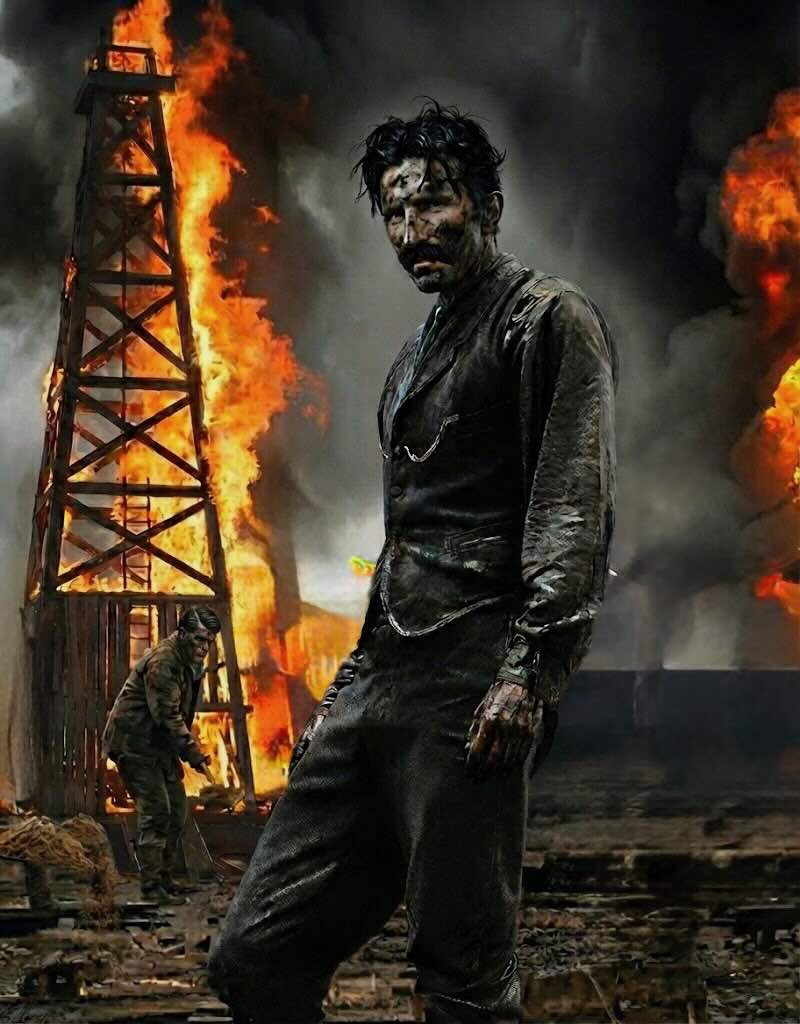
A young and ambitious Edward L Doheny
At the peak of his power in the 1920s, Doheny's legacy was permanently tarnished by the Teapot Dome scandal—the most infamous political corruption case of the era. Doheny bribed his old prospecting friend, Secretary of the Interior Albert B. Fall, with a $100,000 "loan" delivered in a black bag by Doheny's son, Ned. In exchange, Doheny secured no-bid drilling rights to the U.S. Navy’s petroleum reserves at Elk Hills in California.
When the scandal broke, Fall became the first U.S. cabinet member ever sent to prison. In a bizarre legal twist, Doheny was acquitted of giving the bribe that Fall was convicted of taking, though Doheny was ultimately forced to pay $47 million in restitution. His later life was marred by tragedy, including the unsolved murder-suicide of his son Ned at the family's Greystone Mansion in 1929. Doheny spent his final years as an invalid, dying in 1935.
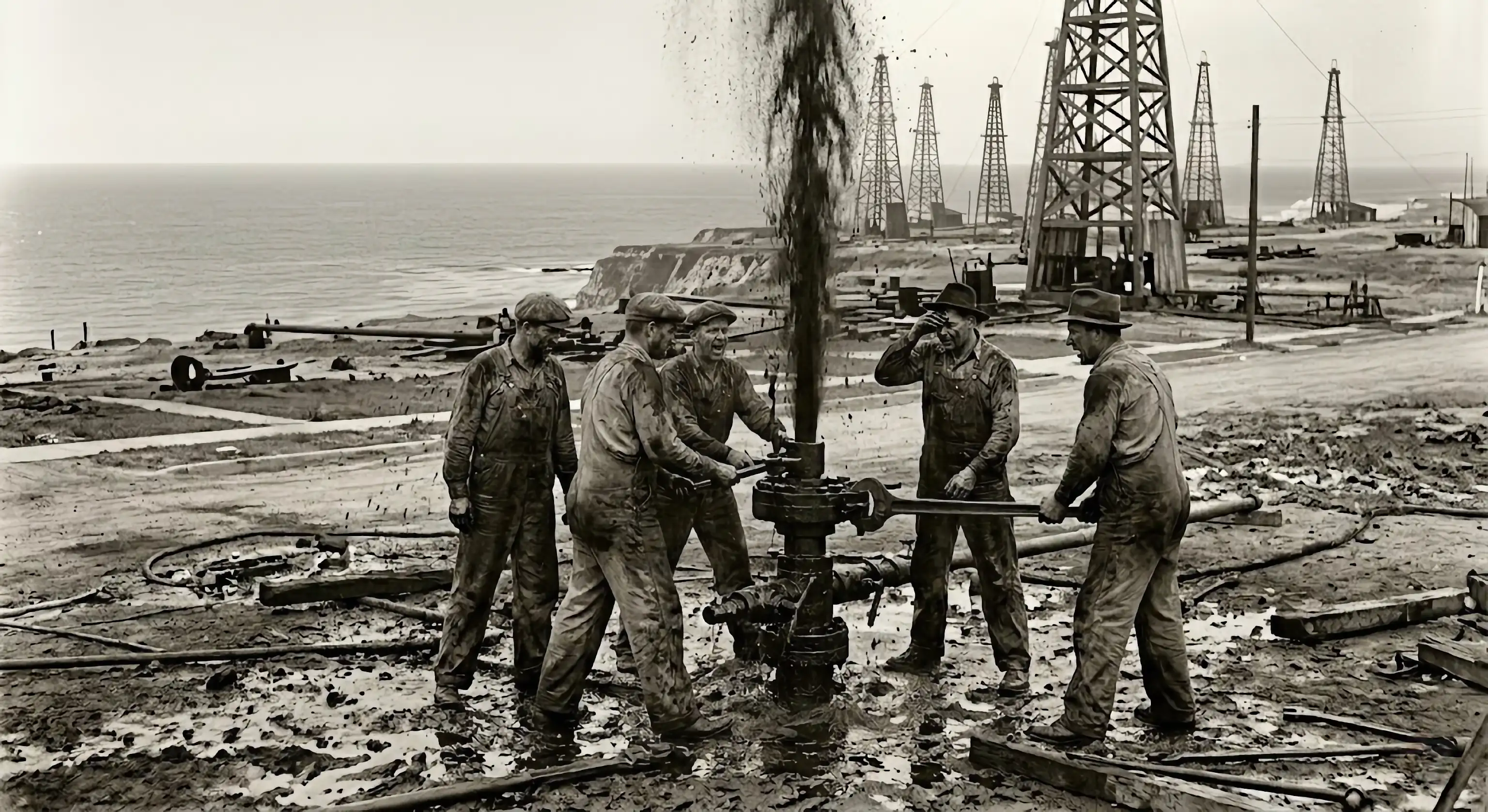
Following Doheny’s initial discovery in the Los Angeles City Oil Field, prospectors aggressively mapped the region's fault lines. By the 1920s, California was the most productive oil state in the nation, and the Los Angeles Basin alone was producing roughly 20% of the world's total oil supply.
Key fields driving this massive output included:
The equipment used in the early days of exploration consisted of rudimentary drilling rigs powered by steam engines. Pumps were initially simple reciprocating devices that relied on steam, and later electric motors, to bring the crude to the surface.
Over time, as surface fields became crowded and deeper reserves were targeted, technology evolved. The introduction of sophisticated rotary drilling rigs, directional drilling (which allowed multiple angled wells to spiderweb outward from a single small surface site), and secondary recovery methods like water flooding dramatically increased efficiency and extended the life of aging fields.
During its peak production years in the early to mid-20th century, Los Angeles County alone produced millions of barrels annually. As onshore production shifted and the massive offshore reserves of the Wilmington Oil Field beckoned, a unique solution was required to bypass local drilling bans and prevent the coastal city of Long Beach from physically sinking due to land subsidence.
In 1965, a consortium of five oil companies (Texaco, Humble, Union, Mobil, and Shell—collectively known as THUMS) built four artificial islands in San Pedro Bay at a cost of $22 million. Using 640,000 tons of boulders from Catalina Island, they created 10-acre platforms. To appease residents, the city mandated aesthetic mitigation. Theme park architect Joseph Linesch—who helped landscape Disneyland—was hired to camouflage the operations. He designed lush tropical landscaping, waterfalls, and soundproofed structures that resembled upscale high-rise condos, completely hiding the drilling rigs within.
In 1967, they were officially named the "Astronaut Islands" (Grissom, White, Chaffee, and Freeman) in honor of the NASA astronauts who died during early space exploration. Today, they still pump thousands of barrels a day, hidden in plain sight.
The drawdown of Southern California's oil is a fascinating story of geology colliding with rapid urban development. The landscape looks vastly different today—fields that once looked like forests of wooden derricks have been plugged, capped, and replaced by subdivisions and strip malls.
However, the assumption that the oil is completely gone is a misconception. The region didn't run out of oil; it simply ran out of easy space and political will to extract it.
Here is the breakdown of the drawdown, the history, and the massive economic impact of the Southern California oil boom.
Southern California, specifically the Los Angeles Basin, sits on one of the most concentrated, prolific petroleum systems on the planet. Its thick sandstone reservoirs and deep structural traps created an incredibly dense amount of oil per square mile.
The history of the region is completely intertwined with the discovery of crude.
Calculating the exact historical cash value of Southern California's oil since 1892 is incredibly difficult due to inflation and wild fluctuations in the price of crude (from pennies a barrel in the 1920s to over $100 today). However, the historical value easily reaches into the trillions of dollars in modern equivalent value.
To put the modern economic impact into perspective based on recent industry reports (pre-phase out):
One of the most controversial aspects of Southern California's oil and real estate history involves capped oil wells. The current reality is a mix of a massive lack of foresight, incredibly lax historical laws, and a real estate industry that operated under very different rules than it does today.
Oil operators of the 1920s and 30s had no idea their dusty, industrial oil fields would eventually become high-density, multi-million-dollar suburban neighborhoods.
When a well dried up in 1928, the operator simply followed the laws of 1928. At the time, the primary concern wasn't stopping methane from leaking into a future living room; it was simply getting the heavy equipment out of the way and keeping people from falling into the hole. They tossed in debris, poured a rudimentary cement plug, and walked away. Many of these companies were small, "wildcat" operations that went bankrupt or dissolved decades ago.
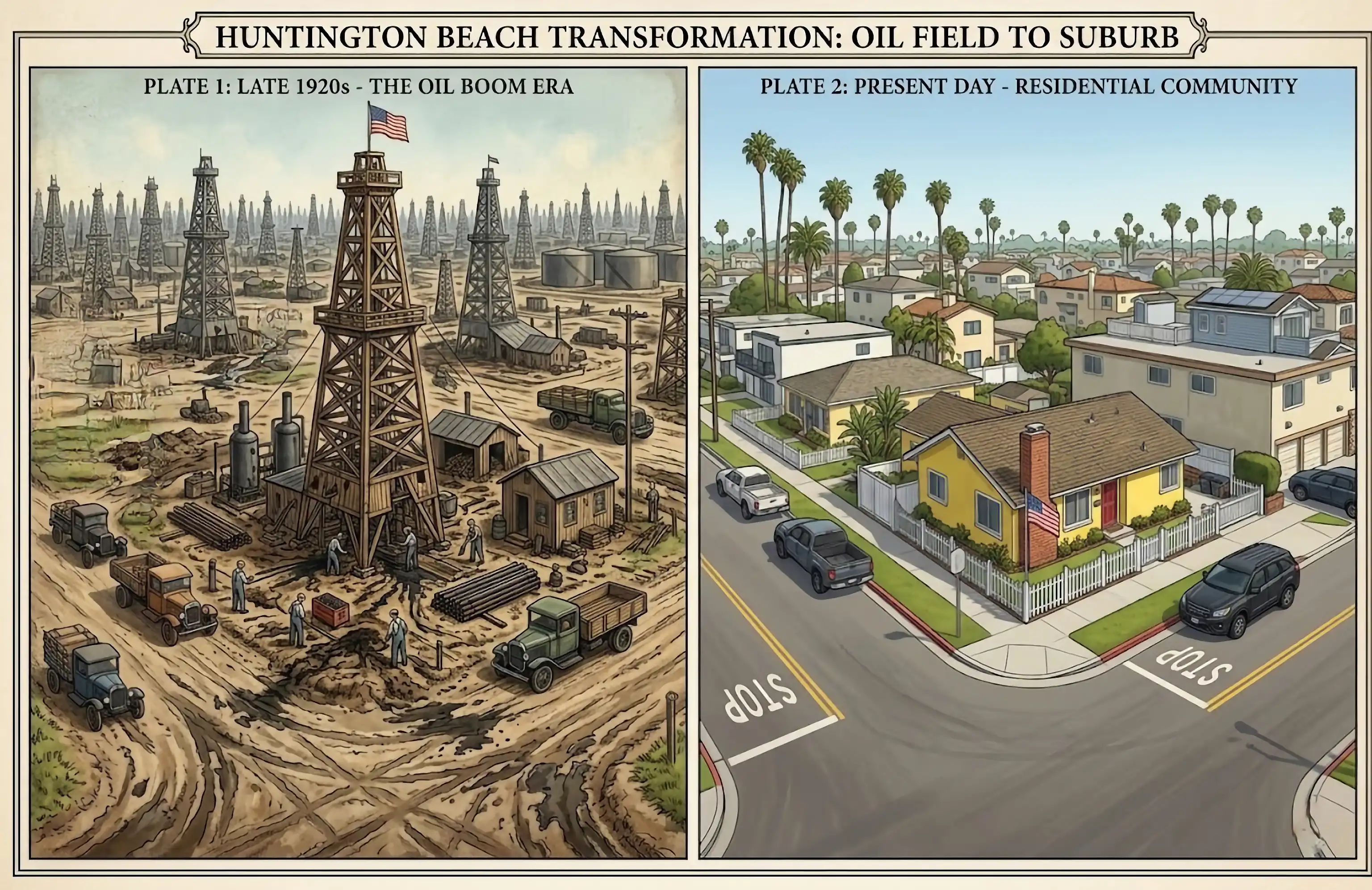
Did builders keep it a secret to maintain property values? Yes, but it wasn't necessarily a shadowy, illegal conspiracy—it was just how real estate worked at the time.
Until the late 1980s, real estate sales in California largely operated under the doctrine of caveat emptor (buyer beware). If a buyer didn't explicitly ask what was buried under the soil, the builder or seller had no legal obligation to volunteer that information. It wasn't until 1987 that California introduced the standard Real Estate Transfer Disclosure Statement (TDS), which forces sellers to disclose known material facts about a property, including environmental hazards.
During the post-WWII boom of the 40s, 50s, and 60s, builders were churning out tract homes at breakneck speed. If they bought a cheap, graded plot of land in Long Beach, they poured the foundation and sold the house. Volunteering the fact that an old oil well was sitting under the kitchen would have killed the sale, so they simply didn't mention it.
Because current laws generally protect current homeowners and pre-1988 builders from liability for historical wells, thousands of these old wells sit uninspected. However, if one of these pre-1988 wells starts leaking methane or oil into a neighborhood today, it still must be fixed. Here is how that plays out:
Here is the brutal, unvarnished reality of California real estate law: The state will pay to plug the hole, but the homeowner is entirely on their own to pay for the house.
If a pre-1988 orphan well directly beneath a kitchen starts leaking methane or crude oil, it is a catastrophic financial event for the homeowner. Here is exactly how the liability and logistics break down in that scenario:
It is impossible to plug an oil well from inside a kitchen. Re-abandoning a well to modern standards requires bringing in a massive workover rig—essentially a towering steel derrick that can be 60 to 90 feet tall—to drill out the old 1940s concrete and pump specialized cement thousands of feet into the earth.
If the wellhead is dead center under a foundation, CalGEM will require "surface access." This means that section of the home—or potentially the entire structure, depending on the footprint and the rig's turning radius—must be physically demolished just to let the state's heavy equipment reach the wellhead.
Many assume their multi-million dollar homeowners insurance policy will cover the demolition and rebuilding. It almost certainly will not.
Standard homeowners insurance policies contain strict exclusion clauses for:
Unless a homeowner proactively purchased highly specialized, incredibly expensive environmental liability riders (which almost no one does for residential tract homes), the insurance company will deny the claim.
Because homes in these dense neighborhoods are often only feet apart, neighboring properties are also put in a precarious situation, though the houses themselves might survive. CalGEM and local fire authorities would likely force a mandatory evacuation of the neighboring homes due to the risk of explosive methane, toxic hydrogen sulfide (H₂S) gas, and the sheer danger of operating a massive industrial drilling rig mere feet from their rooflines.
Unless the rig literally cannot be positioned without knocking down the neighbor's wall, their house stays standing. However, their property value will plummet while a state-funded oil rig grinds away next door for months.
It is a massive legal and financial blind spot from the mid-century building boom, and when it goes wrong, the homeowner is left holding the bag for the structure itself.
Bakersfield Oil
Fields
Main Index
Copyright CCCarto 2026