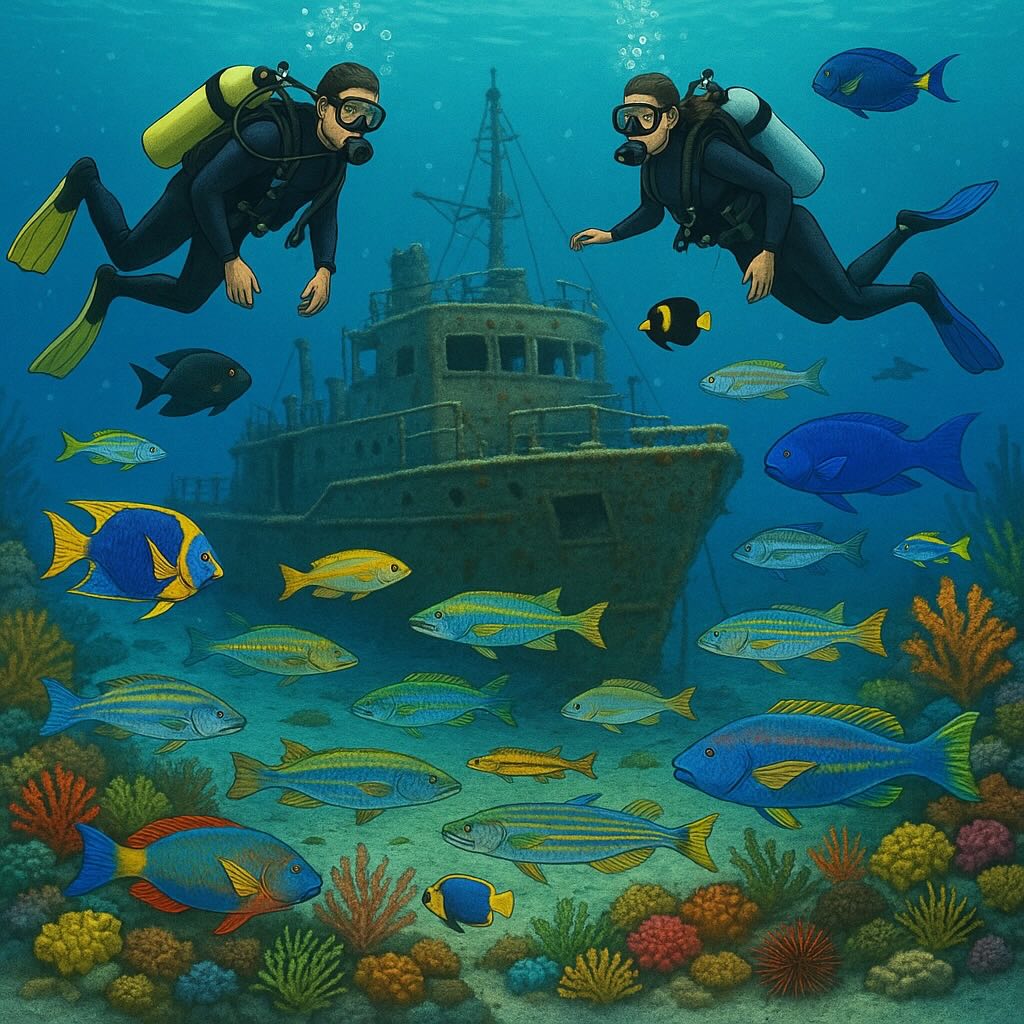
Florida Artificial Reef Programs — Overview, Materials, Locations & Impacts
Status: updated September 16, 2025
Florida Reef Building Programs
Florida's artificial reef efforts are coordinated through the Florida Fish and Wildlife Conservation Commission (FWC), Division of Marine Fisheries Management. The program provides technical and financial support to counties, nonprofits, and universities to construct, monitor, and assess reefs. Florida maintains one of the most active artificial reef programs in the United States, with 4,400+ documented public reef deployments statewide (state and federal waters).[1][2]
Types of Florida Artificial Reefs
Common, permit-approved materials used to build artificial reefs include:[1]
- Concrete (e.g., culverts, modules, prefabricated units)
- Limestone boulders
- Heavy-gauge steel structures (e.g., cleaned vessels, barges)
- Specialized units such as reef balls and geometric modules (various concrete designs)
Materials must be heavy, stable, durable, and non-polluting, and vessel deployments must follow EPA/MARAD best-practice guidelines.[1]
Notable Florida Artificial Reef Sites
Artificial reefs are sited along most of Florida's coastline and offshore to maximize ecological and recreational benefits. FWC maintains a public Artificial Reef Deployment Locator with site details and downloads.[3][2]
- Key Largo Dry Rocks (Monroe County) — A popular natural reef site that also features the iconic Christ of the Abyss underwater statue, a placed structure that draws snorkelers and divers in John Pennekamp Coral Reef State Park.[4][5]
- Panama City Beach Artificial Reef Sites (Bay County) — Extensive county program with hundreds of concrete modules and other structures offshore of St. Andrew Bay Pass; public maps and coordinates are available through UF/IFAS/Bay County and local agencies.[6][7][8]
- Jacksonville Offshore Reefs (Duval County) — Multiple permitted offshore reefs including large concrete culvert deployments (e.g., "Floyd's Folly") and historic projects such as the AFDM-9 dry dock site; coordinates and histories are published by local partners and the City of Jacksonville.[9][10][11]
Impact on Marine Life Habitat
Artificial reefs add complex seafloor structure that provides shelter and attachment surfaces for marine organisms, supports colonization by corals and invertebrates, and can increase local fish biomass and biodiversity relative to adjacent soft bottom.[1][12]
Impact on Florida Sport Fishing and Diving
- Sport fishing: Reefs aggregate popular game species (e.g., snapper, grouper, amberjack, kingfish), supporting robust recreational fisheries and coastal economies.[1][12]
- Diving: Artificial sites create accessible, high-interest destinations for divers and snorkelers statewide (e.g., Christ of the Abyss at Key Largo Dry Rocks).[4][5]
Coral and Marine Growth
The transformation of a man-made object into a living habitat is a process called biological succession. The type of life that takes hold depends on the structure's material, depth, and distance from the Gulf Stream.
- Pioneer Species (0–1 Year): Within weeks, a "biofilm" of bacteria and algae coats the surface. This is followed by barnacles, bryozoans, and hydroids, which create the first layer of texture.
- Soft Corals & Sponges (1–5 Years): As the reef matures, it becomes dominated by Gorgonians (sea fans and sea whips). You will also see colorful Encrusting Sponges and Tunicates (sea squirts) filling in the gaps.
- Hard Corals (5+ Years): In the warmer waters of the Keys and the Southeast coast, stony corals like Star Coral, Brain Coral, and Ivory Bush Coral begin to build calcium carbonate skeletons, providing the "hard" architecture of a permanent reef.
West Coast (Gulf of Mexico)
The Gulf of Mexico has a broad, shallow shelf. The artificial reefs here are legendary for producing "table fare" or "grocery" fish.
- Bottom Fish: This is the land of the Gag Grouper and Red Grouper. You will also find massive schools of Gray (Mangrove) Snapper and Lane Snapper.
- Game Fish: King Mackerel and Spanish Mackerel are common in the mid-water column. In the summer, Cobia are frequently seen hovering right above the structures.
- The Heavyweights: The Gulf's artificial reefs are the primary home for the Goliath Grouper, which can reach weights of over 400 pounds.
East Coast (Atlantic)
The Atlantic shelf is narrower and deeper, meaning artificial reefs often sit closer to the powerful currents of the Gulf Stream.
- Bottom Fish: Vermilion Snapper (Beeliners) and Red Snapper are the primary targets. Black Sea Bass are very common on reefs from Cape Canaveral northward.
- Game Fish: Because the deep water is so close, you'll find Sailfish, Wahoo, and Mahi-Mahi (Dolphin) patrolling the edges of these reefs to hunt baitfish.
- Jacks: Massive Greater Amberjack (known as "Reef Donkeys") and Almaco Jacks typically congregate around high-profile shipwrecks.
The Florida Keys
Reefs in the Keys benefit from high water clarity and a mix of Caribbean and Atlantic species.
- Primary Species: Yellowtail Snapper and Mutton Snapper are the most sought-after fish here. Black Grouper are also more prevalent than in the northern regions.
- Specialty Game Fish: Large shipwrecks like the Vandenberg or the Spiegel Grove attract Permit, African Pompano, and occasionally Blackfin Tuna.
Key Deployment Regions
| Region | Primary Reef Types | Notable Examples |
|---|---|---|
| Panhandle | Bridge rubble, tanks, and massive ships. | USS Oriskany (World's largest artificial reef) |
| Big Bend / West | Concrete tetrahedrons and culverts. | Steinhatchee Reef (Huge patch reef system) |
| Southeast | Sunken freighters and custom "reef balls." | The "Wreck Trek" off Broward County |
| The Keys | Retired military vessels and research towers. | USS Spiegel Grove (Key Largo) |
Bottom Line
Florida's artificial reef program is widely regarded as successful at enhancing marine habitat and supporting recreation and local economies. The statewide database shows thousands of deployments, and ongoing grants and monitoring continue to refine designs and placement for long-term, sustainable benefits.[1][2][12]